In This Article
- Introduction
- Choose a Location That Works for Both the Kitchen and the Plants
- Select Plants That Can Adapt to the Environment
- Choose Suitable Pots, Soil, and Drainage
- Use Walls and Vertical Space
- Water and Care for Plants Without Complicating the Routine
- Integrate the Green Corner With the Kitchen Design
- Common Mistakes When Adding Plants to the Kitchen
- Adapt the Project to Everyday Life
- Evaluate the Green Corner After the First Few Weeks
- Make the Arrangement Easier to Maintain
- Frequently Asked Questions
- Plan for Seasonal Changes
- Plan for Seasonal Changes
- Plan for Seasonal Changes
- Conclusion
Introduction
A green corner can make a kitchen feel fresher and more welcoming without sacrificing valuable work space. The best results come from choosing plants that match the available light, using stable pots with reliable drainage, and placing greenery where it does not interfere with food preparation, cleaning, doors, or appliances. Planning matters more than the number of plants.
Before buying anything, observe the kitchen at different times of day. Note where sunlight reaches, where heat and steam accumulate, and which surfaces must remain clear. A successful indoor garden should fit naturally into the kitchen routine rather than creating another task that constantly requires moving objects.
Choose a Location That Works for Both the Kitchen and the Plants
Kitchens can offer good light and some humidity, but they also contain heat, steam, grease, and frequent temperature changes. A windowsill, sturdy shelf, or bright corner is generally more suitable than a position beside the oven or directly above a cooking surface. Plants need appropriate conditions, but the kitchen must remain safe and practical.
Observe the light over several hours. Some windows receive intense direct sun while others provide bright filtered light. Choose the plant only after understanding these conditions. Also avoid places where opening a door or window, or simply walking through the room, could repeatedly damage leaves or knock over containers.
Hygiene is particularly important around food. Pots should remain stable and away from areas where soil or drainage water could reach ingredients or preparation surfaces. Leave enough room to wipe around containers easily so the green corner never makes everyday cleaning unnecessarily difficult.
Select Plants That Can Adapt to the Environment
Culinary herbs can combine greenery with practical use, but different herbs have different requirements. Basil, parsley, mint, rosemary, and other species should not automatically share the same container if their preferences for sun, moisture, and soil differ. Understanding each plant before grouping them prevents avoidable losses.
Ornamental houseplants can also work when light, temperature, and available space are suitable. Consider mature size, not only the size at purchase. A compact plant can eventually occupy a large part of a counter or shelf. For small kitchens, species with manageable growth are often easier to integrate.
Start with only a few plants. Three or four healthy specimens usually create a stronger effect than a large collection with incompatible needs. After several weeks, you can see which locations perform best and expand the arrangement with greater confidence.
Choose Suitable Pots, Soil, and Drainage
Containers need drainage holes or another reliable way to manage excess water. A decorative cachepot can hide a nursery pot, but water should never remain trapped around the roots for long periods. Protective saucers help prevent stains on shelves and counters when they are emptied after watering.
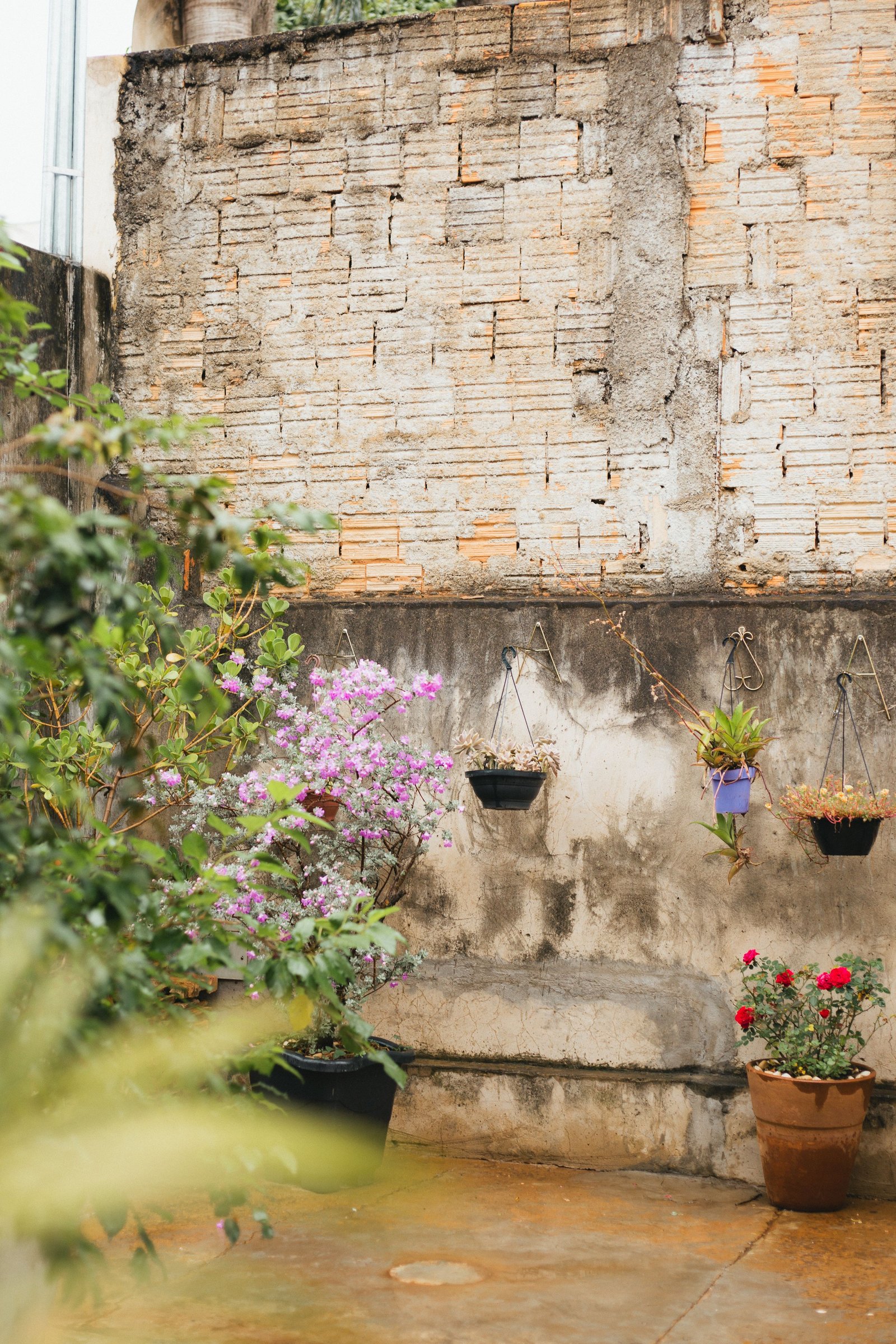
Pot size should correspond to the root system. An oversized container can hold moisture longer than necessary, while a pot that is too small dries quickly and restricts growth. When repotting, increase size gradually and use a growing medium appropriate for the particular plant.
Easy-to-clean materials are useful in a kitchen because dust and cooking residue can settle on pots and foliage. Keeping plants at a sensible distance from the cooking zone and wiping containers and leaves when necessary helps preserve both appearance and plant health.
Use Walls and Vertical Space
Covering a small countertop with pots is rarely practical. Secure shelves, rails, window ledges, and carefully designed vertical systems can preserve preparation space. Any support must be properly installed and able to hold the weight of wet soil and containers, which is considerably greater than the weight of empty pots.
Keep plants that require frequent watering or harvesting within comfortable reach. Higher shelves may suit lower-maintenance specimens if the light is adequate. Avoid hanging or placing pots above hot food, knives, electrical equipment, or other areas where a falling container could create a hazard.
Grouping pots usually looks more intentional than scattering them across every available surface. Repeating one material, color family, or shape can connect the plants visually with existing cabinets and finishes while still allowing individual containers to differ.
Water and Care for Plants Without Complicating the Routine
Water according to the moisture of the growing medium rather than a fixed weekday. Kitchen temperature, season, plant size, and pot size all affect drying speed. Check the soil before watering and learn the needs of each species instead of giving every container the same amount at the same time.
Remove dry leaves, wipe dust from foliage, and inspect plants regularly. Early signs of pests or stress are easier to address on one plant than after a problem spreads through the entire group. Temporarily separating an affected specimen can also make monitoring easier.

Herbs used for cooking benefit from appropriate harvesting. Clean tools and correct cutting methods can encourage compact growth, while removing too much foliage at once can weaken a plant. Learn how each herb should be harvested and wash edible leaves before use.
Integrate the Green Corner With the Kitchen Design
Plants soften hard kitchen surfaces and add natural contrast. Pots do not need to be identical, but a shared color, material, or shape can create unity. Scale is equally important: very large containers on a narrow shelf look unbalanced and may be unsafe.
If natural light is limited, reconsider the location before assuming that any ordinary lamp will solve the problem. Purpose-designed grow lighting may help in some situations, but it should be selected and used correctly. Moving the plants to a naturally brighter position can be a simpler solution.
The best green corner is one that can remain in place while the kitchen is being used. If every meal requires moving several pots to clean, chop, open a cabinet, or use an appliance, the arrangement needs adjustment.
Common Mistakes When Adding Plants to the Kitchen
Buying plants without first checking the light is one of the most common mistakes. A species that thrives in one bright kitchen may struggle in another. Placing pots too close to heat sources or where they obstruct preparation and cleaning is another avoidable problem.
Overwatering is also frequent, especially when decorative outer pots hide accumulated water. Check inner containers after watering and empty excess water. Each plant should be watered according to its condition, not simply because the neighboring pots were watered.
Avoid collecting too many demanding species if plant care must fit into a busy routine. Beginning with resilient plants and learning their responses creates a more sustainable foundation than purchasing a large collection with very different requirements.
Adapt the Project to Everyday Life
Observe the plants for several weeks before expanding the collection. Kitchen humidity and temperature change with cooking habits, and a location that initially looks ideal may not suit every species. Moving a pot a short distance can sometimes improve its light or protect it from heat without requiring new equipment.
Spend first on appropriate containers, good growing medium, and healthy plants suited to the space. Decorative accessories are secondary. Existing containers can sometimes be reused as outer pots when they are stable and easy to clean, while the plant remains in a properly draining inner pot.
If you grow edible herbs, label them clearly and use cultivation practices suitable for food plants. Keep the area clean, remove damaged foliage, and avoid products that are not intended for edible crops.
Evaluate the Green Corner After the First Few Weeks
The first weeks reveal whether the selected locations are working. Watch growth, leaf color, and how quickly the soil dries. A plant leaning strongly toward a window may need better light or periodic rotation. Soil that stays wet too long can indicate a drainage, pot, or watering problem.
Check whether the arrangement interferes with kitchen use. Pots should not make it difficult to wipe a shelf, open a window, or use a work surface. If they must be moved several times each day, regroup them on a tray, adjust shelf height, or reduce the number of containers.
Decide which species genuinely suit the room. Replacing a plant that does not adapt is not a failure; it is part of learning the specific conditions of the home. Over time, the green corner becomes easier to maintain because it contains plants that actually respond well to the available light and routine.
Make the Arrangement Easier to Maintain
Keep a small watering can and basic plant-care tools nearby if there is a safe, tidy place for them. This reduces the effort required for routine care. A removable tray beneath a group of pots can also make cleaning faster because several containers can be moved together instead of one at a time.
Rotate or prune plants when growth begins to interfere with cabinets, windows, or preparation space. The goal is not to preserve the original arrangement forever but to let it evolve while the kitchen remains fully functional.
Frequently Asked Questions
What plants can be kept in a kitchen?
It depends mainly on light, temperature, and space. Culinary herbs and many houseplants can work when their needs match the actual kitchen conditions.
Is it a good idea to place plants beside the stove?
Usually not. Heat, steam, grease, and temperature changes can affect plants and make hygiene more difficult. A position farther from the cooking area is generally more practical.
How can I keep plants when counter space is limited?
Use safe shelves, window ledges, or vertical systems while keeping plants accessible and away from risky areas and food-preparation surfaces.
Plan for Seasonal Changes
Light levels can change considerably through the year, even when the plants remain beside the same window. A position that works in one season may become too dark or receive stronger direct sun in another. Watch for changes in growth and leaf condition, and adjust placement gradually rather than making several changes at once.
Heating, air conditioning, and changes in cooking frequency can also alter temperature and humidity. Keep plants away from strong drafts and sudden heat. Regular observation is more useful than following a rigid calendar because the kitchen environment and the plants themselves continue to change.
Plan for Seasonal Changes
Light levels can change considerably through the year, even when the plants remain beside the same window. A position that works in one season may become too dark or receive stronger direct sun in another. Watch for changes in growth and leaf condition, and adjust placement gradually rather than making several changes at once.
Heating, air conditioning, and changes in cooking frequency can also alter temperature and humidity. Keep plants away from strong drafts and sudden heat. Regular observation is more useful than following a rigid calendar because the kitchen environment and the plants themselves continue to change.
Plan for Seasonal Changes
Light levels can change considerably through the year, even when the plants remain beside the same window. A position that works in one season may become too dark or receive stronger direct sun in another. Watch for changes in growth and leaf condition, and adjust placement gradually rather than making several changes at once.
Heating, air conditioning, and changes in cooking frequency can also alter temperature and humidity. Keep plants away from strong drafts and sudden heat. Regular observation is more useful than following a rigid calendar because the kitchen environment and the plants themselves continue to change.
Conclusion
A kitchen green corner works best when plant health and kitchen function are treated as equally important. Observe the light, select compatible species, provide drainage, preserve work surfaces, and build a care routine that is easy to maintain. Start small, evaluate the arrangement after several weeks, and change what does not work. The result can add natural beauty to the room without sacrificing cleanliness, safety, or the practical space needed for everyday cooking.