In This Article
- Introduction
- Plan the Layout Before Decorating
- Choose the Right Bed Position
- Use Furniture With Appropriate Scale
- Take Advantage of Vertical Space
- Use Color to Create Visual Continuity
- Improve Natural and Artificial Light
- Choose Curtains Carefully
- Use Mirrors With Purpose
- Reduce Visual Clutter
- Improve Storage Without Overfilling the Room
- Choose Textiles and Rugs in the Right Proportion
- Create One Clear Focal Point
- Common Mistakes to Avoid
- Frequently Asked Questions
- Use Proportion to Keep the Room Balanced
- Use Proportion to Keep the Room Balanced
- Use Proportion to Keep the Room Balanced
- Use Proportion to Keep the Room Balanced
- Use Proportion to Keep the Room Balanced
- Use Proportion to Keep the Room Balanced
- Use Proportion to Keep the Room Balanced
- Use Proportion to Keep the Room Balanced
- Use Proportion to Keep the Room Balanced
- Conclusion
Introduction
A small bedroom can feel comfortable, organized, and visually spacious when the layout, furniture, storage, color, and lighting work together. The goal is not to make the room look empty. It is to use the available area efficiently while preserving comfortable circulation and enough visual breathing room.
Before buying new furniture or decoration, identify what currently makes the room feel smaller. Oversized furniture, poor lighting, cluttered surfaces, blocked windows, and too many unrelated colors can all contribute. Correcting these issues often creates more improvement than adding decorative objects.
Plan the Layout Before Decorating
Measure the room, doors, windows, wardrobe openings, and any fixed elements. Draw a simple floor plan or use painter's tape to test furniture positions. Make sure drawers and doors can open completely and that walking routes remain clear.
Prioritize the pieces that are genuinely necessary. In many bedrooms, the bed and clothing storage are the largest requirements. Additional chairs, benches, or tables should only remain if they serve a real function without restricting movement.
Leaving some visible floor area can make the room feel calmer. Avoid placing small pieces of furniture in every available corner simply because they fit.
Choose the Right Bed Position
The bed is usually the largest element and should anchor the layout. When possible, position it where access is comfortable and where it does not block windows, doors, or storage.
A bed pushed against a wall may save space in some rooms, but it can make access difficult for two people. Evaluate daily use rather than following a fixed design rule.
Keep the area around the bed visually simple. A clear wall, a restrained headboard, or one piece of artwork can create a stronger sense of order than many small decorations.
Use Furniture With Appropriate Scale
Small rooms need furniture that matches their dimensions. A very deep dresser or wide bedside table can consume valuable circulation space even when the room technically accommodates it.
Look for narrow bedside tables, wall-mounted shelves, compact dressers, or multifunctional pieces. Furniture with visible legs can sometimes make more floor area visible, creating a lighter appearance.
Do not automatically choose miniature furniture. Pieces should still be practical. A bedside table that cannot hold the items you use every night may create more clutter elsewhere.
Take Advantage of Vertical Space
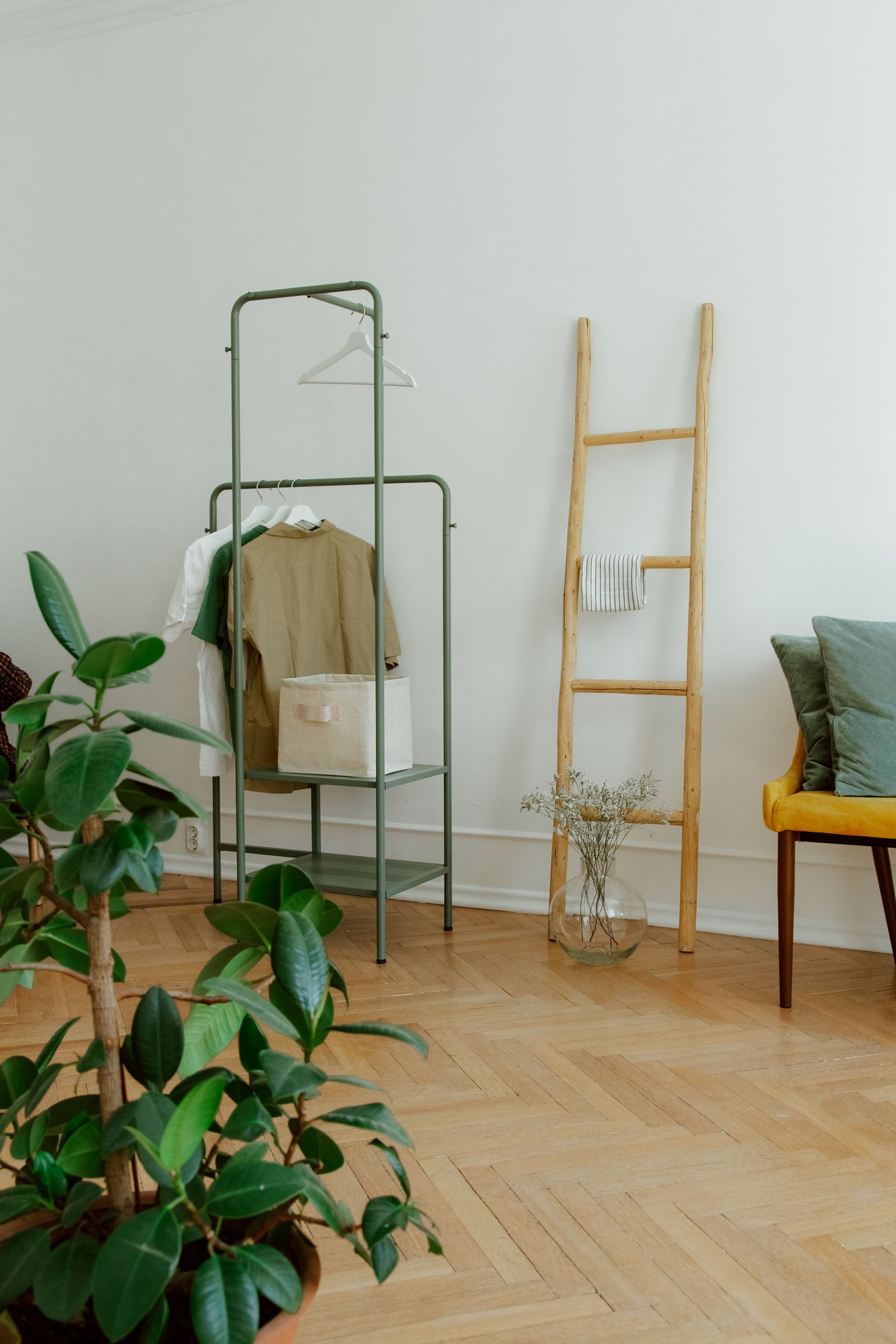
Walls provide useful storage without consuming additional floor area. Tall shelving, wall-mounted lights, hooks, and shelves above suitable furniture can help organize the room.

Keep heavy objects secure and avoid placing unstable items above the bed. Follow appropriate installation methods for the wall type and expected load.
Use upper storage for items that are not needed every day. Frequently used belongings should remain easy to reach so organization does not become inconvenient.
Use Color to Create Visual Continuity
Light colors can reflect more available light, but a small bedroom does not have to be completely white. Soft neutrals, muted colors, and even deeper shades can work when the palette is coherent.
Limit the number of competing colors. Repeating one or two accent colors across bedding, artwork, and accessories creates continuity and reduces visual fragmentation.
Paint the ceiling, trim, and walls thoughtfully. Strong contrast can be attractive, but too many abrupt transitions may make a very small room feel busier.
Improve Natural and Artificial Light
Keep windows as unobstructed as privacy and comfort allow. Large furniture directly in front of a window can reduce daylight and make the room feel more enclosed.
At night, use more than one light source when possible. A ceiling fixture combined with bedside or wall lights creates depth and gives different options for reading, dressing, and relaxing.
Wall-mounted bedside lights can free the top of small nightstands. Choose fixtures and electrical installations appropriate for the room and follow safety requirements.
Choose Curtains Carefully
Curtains can influence the perceived height and width of a wall. Mounting the rod appropriately above the window and allowing curtains to frame rather than cover most of the glass can preserve daylight.

Choose the fabric according to privacy, light control, and climate. A bedroom may need a blackout layer, but that can be combined with a lighter curtain for daytime use.
Measure before purchasing. Curtains that are too short or narrow can make the window look smaller and reduce the polished appearance of the room.
Use Mirrors With Purpose
A mirror can reflect light and add visual depth, especially when positioned where it reflects an attractive or bright part of the room.
Do not add many mirrors simply to make the room appear larger. One well-positioned mirror is often more effective and easier to integrate.
Secure large mirrors correctly, particularly in areas where they could be bumped. Safety and stability are more important than decorative effect.
Reduce Visual Clutter
Clear dresser tops, bedside tables, and the floor. Visible clutter makes a small room feel even smaller because the eye has fewer calm areas to rest.
Group small objects in trays or containers rather than scattering them across surfaces. Keep only frequently used or meaningful items visible.
Cables also contribute to visual clutter. Organize chargers and lamp cords so they do not accumulate around the bed or floor.
Improve Storage Without Overfilling the Room
Use existing storage efficiently before buying more furniture. Review clothing, remove items no longer used, and organize shelves and drawers by category.
Under-bed storage can be useful for seasonal bedding, shoes, or less frequently used items. Choose containers that are easy to access and keep stored items protected from dust.

Storage furniture should not become a reason to keep unnecessary belongings. Reducing the volume of possessions can be more effective than adding another cabinet.
Choose Textiles and Rugs in the Right Proportion
Bedding occupies a large visual area, so a simple coordinated set can make the room feel more organized. Use texture to create interest without adding too many patterns.
A rug can soften the room, but size matters. A rug that is too small may visually divide the floor into more sections. Measure the bed and available floor before choosing one.
Use cushions and throws selectively. Too many decorative layers can overwhelm a compact bedroom and create extra work every day.
Create One Clear Focal Point
The bed wall is a natural focal point. Artwork, a headboard, a restrained wall color, or coordinated lighting can give the room a clear visual center.
Keep supporting walls simpler. When every wall contains a strong pattern, gallery, shelf, or large decoration, the room can feel crowded.
A focal point should help organize the composition rather than become another source of clutter.
Common Mistakes to Avoid
Oversized furniture is one of the most common problems. Measure before buying and account for doors, drawers, and circulation.
Avoid filling every wall with shelves. Vertical storage is useful, but too many visible objects can create visual weight.
Do not assume that only white makes a room feel larger. Good lighting, proportion, organization, and a coherent palette are equally important.
Finally, avoid purchasing storage before decluttering. Otherwise, the room may simply contain more furniture and the same amount of unnecessary material.
Frequently Asked Questions
What colors work best in a small bedroom?
Light and muted colors are easy to use, but deeper colors can also work. A limited, coherent palette matters more than following one specific color rule.
Should the bed be against the wall?
Only if that arrangement suits the room and the people using it. Comfortable access and circulation should guide the decision.
Do mirrors really make a room feel larger?
They can reflect light and add visual depth, especially when positioned thoughtfully, but they cannot compensate for clutter or oversized furniture.
How can I add storage without making the room crowded?
Use vertical and under-bed space, organize existing storage first, and choose shallow or multifunctional pieces only when they solve a real need.
Use Proportion to Keep the Room Balanced
Proportion matters in every decorative decision. Bedside lamps, artwork, cushions, and storage containers should relate to the size of the bed and furniture rather than being selected independently.
Before adding another item, look at the room from the doorway. If one area feels visually heavy, removing or relocating an object may improve balance more than adding decoration elsewhere.
Use Proportion to Keep the Room Balanced
Proportion matters in every decorative decision. Bedside lamps, artwork, cushions, and storage containers should relate to the size of the bed and furniture rather than being selected independently.
Before adding another item, look at the room from the doorway. If one area feels visually heavy, removing or relocating an object may improve balance more than adding decoration elsewhere.
Use Proportion to Keep the Room Balanced
Proportion matters in every decorative decision. Bedside lamps, artwork, cushions, and storage containers should relate to the size of the bed and furniture rather than being selected independently.
Before adding another item, look at the room from the doorway. If one area feels visually heavy, removing or relocating an object may improve balance more than adding decoration elsewhere.
Use Proportion to Keep the Room Balanced
Proportion matters in every decorative decision. Bedside lamps, artwork, cushions, and storage containers should relate to the size of the bed and furniture rather than being selected independently.
Before adding another item, look at the room from the doorway. If one area feels visually heavy, removing or relocating an object may improve balance more than adding decoration elsewhere.
Use Proportion to Keep the Room Balanced
Proportion matters in every decorative decision. Bedside lamps, artwork, cushions, and storage containers should relate to the size of the bed and furniture rather than being selected independently.
Before adding another item, look at the room from the doorway. If one area feels visually heavy, removing or relocating an object may improve balance more than adding decoration elsewhere.
Use Proportion to Keep the Room Balanced
Proportion matters in every decorative decision. Bedside lamps, artwork, cushions, and storage containers should relate to the size of the bed and furniture rather than being selected independently.
Before adding another item, look at the room from the doorway. If one area feels visually heavy, removing or relocating an object may improve balance more than adding decoration elsewhere.
Use Proportion to Keep the Room Balanced
Proportion matters in every decorative decision. Bedside lamps, artwork, cushions, and storage containers should relate to the size of the bed and furniture rather than being selected independently.
Before adding another item, look at the room from the doorway. If one area feels visually heavy, removing or relocating an object may improve balance more than adding decoration elsewhere.
Use Proportion to Keep the Room Balanced
Proportion matters in every decorative decision. Bedside lamps, artwork, cushions, and storage containers should relate to the size of the bed and furniture rather than being selected independently.
Before adding another item, look at the room from the doorway. If one area feels visually heavy, removing or relocating an object may improve balance more than adding decoration elsewhere.
Use Proportion to Keep the Room Balanced
Proportion matters in every decorative decision. Bedside lamps, artwork, cushions, and storage containers should relate to the size of the bed and furniture rather than being selected independently.
Before adding another item, look at the room from the doorway. If one area feels visually heavy, removing or relocating an object may improve balance more than adding decoration elsewhere.
Conclusion
A small bedroom feels more spacious when its layout is clear, furniture is proportionate, storage is controlled, and lighting reaches the room effectively. You do not need to remove personality or use only white surfaces.
Measure first, preserve circulation, reduce visual clutter, and make each piece earn its place. With a coherent palette, carefully chosen textiles, and one strong focal point, a compact bedroom can feel comfortable, organized, and visually balanced.