In This Article
- Introduction
- Study the Site Before Designing
- Plan the Main Layers
- Choose Plants by Mature Size
- Combine Height, Volume, and Texture
- Use Small Trees and Shrubs as Structure
- Add Perennials, Grasses, and Ground Covers
- Create Height With Containers
- Use Arches, Trellises, and Raised Beds
- Keep Access and Maintenance Practical
- Design for Seasonal Change
- Use Repetition to Connect Different Levels
- Common Mistakes to Avoid
- Frequently Asked Questions
- Plan Views From Inside the House
- Plan Views From Inside the House
- Plan Views From Inside the House
- Plan Views From Inside the House
- Plan Views From Inside the House
- Plan Views From Inside the House
- Plan Views From Inside the House
- Plan Views From Inside the House
- Plan Views From Inside the House
- Plan Views From Inside the House
- Conclusion
Introduction
Working with different heights adds depth, movement, and structure to a garden. Small trees, shrubs, perennials, ornamental grasses, ground covers, containers, and vertical structures can create layered views when they are planned according to climate, light, soil, mature plant size, and maintenance.
The goal is not simply to arrange plants from tallest to shortest. A successful layered garden uses repetition, contrast, open space, and practical access so the composition remains attractive as plants mature and seasons change.
Study the Site Before Designing
Observe the garden from its main viewpoints, including entrances, windows, paths, and seating areas. A planting scheme may look very different from the house than it does from the far end of the garden.
Record sunlight, shade, wind, soil conditions, drainage, and existing slopes. These factors should guide plant selection before color or style.
If the site has significant level changes, erosion, retaining walls, or drainage problems, structural work may require professional assessment. Do not alter slopes or build retaining structures without understanding stability and water movement.
Plan the Main Layers
Sketch background, middle, and foreground areas. This prevents tall plants from permanently hiding smaller species and helps create depth from important viewpoints.
A classic arrangement places taller plants behind medium plants and low plants in front, but the rule does not need to be rigid. Repeating heights and allowing selected plants to rise above neighboring groups can create a more natural rhythm.
Leave some open areas. Continuous dense planting can become visually heavy and may make pruning, watering, and cleaning difficult.
Choose Plants by Mature Size
Nursery plants are often much smaller than they will become. Check expected mature height and width, growth rate, root needs, and required spacing before planting.
A vigorous shrub placed in a narrow bed may require constant pruning. Choosing a naturally appropriate size usually produces a healthier plant and less maintenance.
Consider growth habit as well as height. A narrow upright plant occupies space differently from a broad spreading shrub of the same height.
Combine Height, Volume, and Texture
Height alone does not create an interesting composition. Combine upright grasses, rounded shrubs, airy perennials, and low ground covers to create different forms.
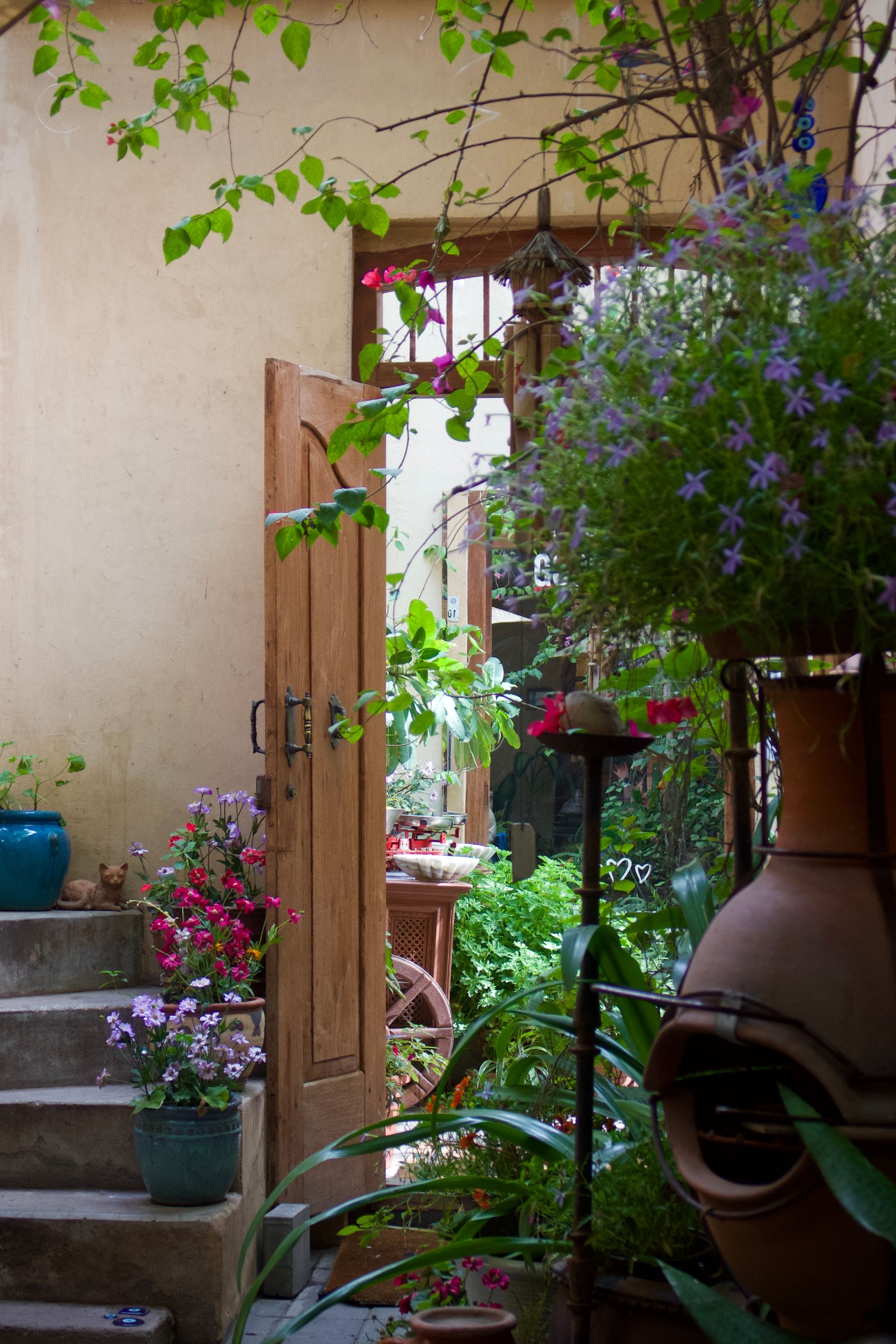
Leaf texture can separate layers even when plants have similar colors. Broad leaves beside fine grasses, for example, create contrast without relying on flowers.
Repeat selected shapes or plants through the garden. Repetition connects separate areas and prevents the design from feeling like a collection of unrelated specimens.
Use Small Trees and Shrubs as Structure
Small trees can create an upper layer, provide shade, frame a view, or mark an important location. Choose species whose mature dimensions fit the garden and whose roots and canopy are appropriate for nearby structures.
Shrubs can form the middle structural layer. Evergreen shrubs may provide year-round form, while deciduous species can contribute flowers, autumn color, or seasonal transparency.
Avoid planting large woody plants too close to paths, walls, utilities, or each other. Plan for the mature plant rather than the size at installation.
Add Perennials, Grasses, and Ground Covers
Perennials and ornamental grasses can connect woody plants with the lower layer. Their changing height, flowers, seed heads, and foliage add seasonal movement.
Ground covers can soften bed edges and cover soil, but choose species with growth habits suitable for the area. Some vigorous plants can spread beyond the intended boundary.
Group plants with compatible water, soil, and light requirements. A visually attractive combination becomes difficult to manage if neighboring plants require contradictory care.
Create Height With Containers
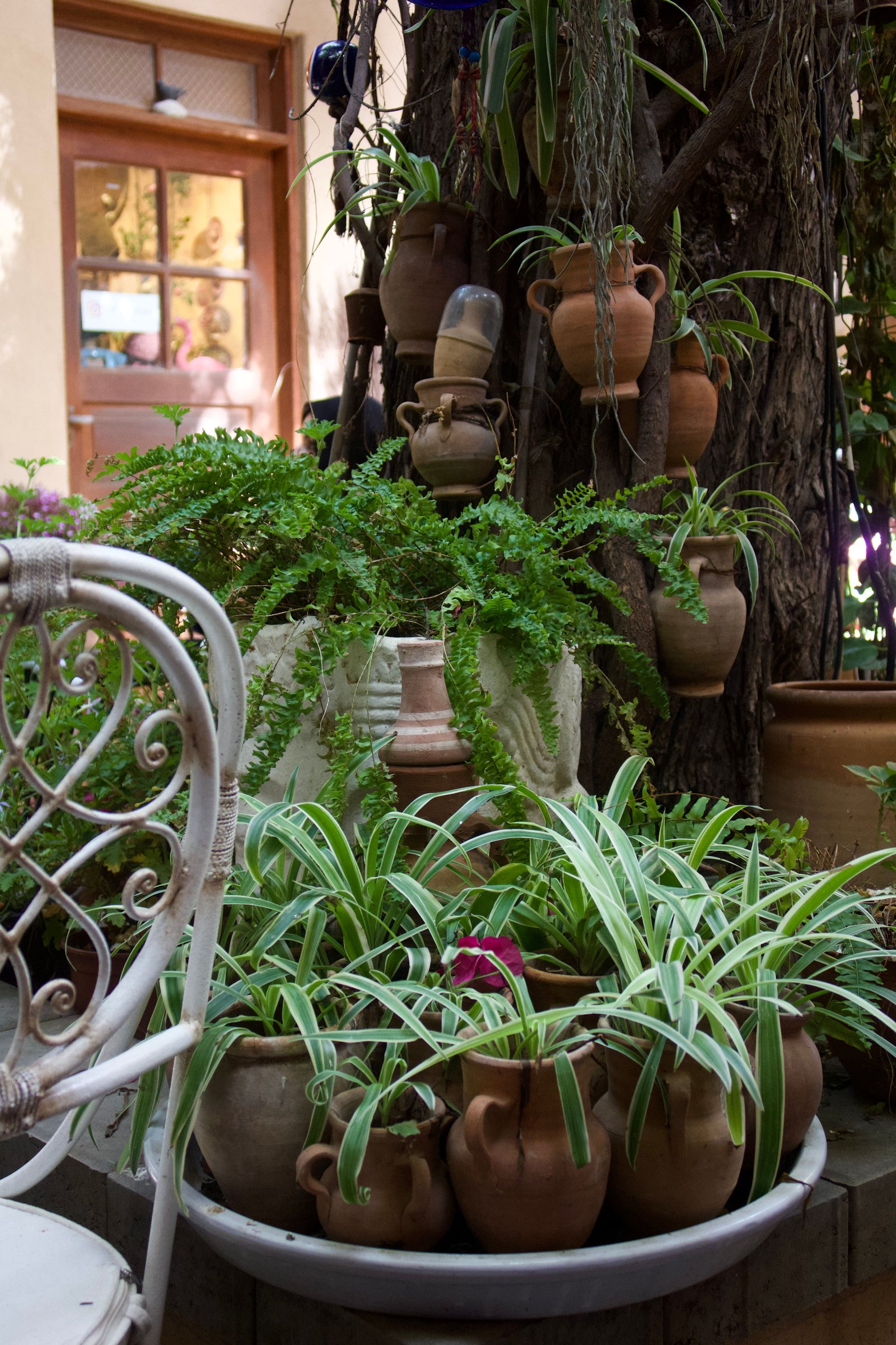
Containers allow you to introduce different levels without changing the ground. Use pots of varied but coordinated sizes and place them where they do not narrow paths.
Containers must be stable and large enough for the plants they hold. Wet potting mix adds considerable weight, so verify that decks, shelves, and raised supports can carry the load.
Use pot stands carefully. A stable low stand can raise a plant into view, but unstable stacks or improvised supports create unnecessary risk.
Use Arches, Trellises, and Raised Beds
Arches, pergolas, and trellises add a vertical layer and can support climbing plants. Select structures strong enough for the mature weight and vigor of the climber.
Raised beds can create height while improving access for some gardening tasks. They require appropriate drainage, soil, and dimensions that allow the center to be reached without stepping into the bed.
Do not add structures only to create height. Each element should provide a clear benefit such as shade, plant support, cultivation space, screening, or visual framing.
Keep Access and Maintenance Practical
Leave routes for pruning, watering, weeding, and removing leaves. A densely layered border may look impressive initially but become difficult to maintain once plants reach full size.
Keep plants from blocking paths as they mature. Account for branches arching outward and for grasses or perennials that expand later in the season.

Place plants needing frequent attention where they are easy to reach. Lower-maintenance species can occupy areas that are more difficult to access.
Design for Seasonal Change
Consider how height changes through the year. Some perennials disappear in winter, grasses may be cut back, and deciduous shrubs lose leaves.
Evergreen plants, woody stems, structures, and selected seed heads can preserve the garden's framework during quieter seasons.
Observe the garden over a full year before making major corrections when possible. A gap in early spring may be filled by summer growth, while a balanced summer bed may need more winter structure.
Use Repetition to Connect Different Levels
Repeat a few plants or forms at different points rather than using a different species in every available space. Repetition creates rhythm and makes transitions between tall, medium, and low layers feel intentional.
The repeated element does not always need to be the same plant. Similar leaf shape, color, or growth habit can also create visual continuity.
Keep enough variation to avoid monotony. The objective is a recognizable rhythm, not perfect duplication.
Common Mistakes to Avoid
Do not choose plants only by their nursery size. Ignoring mature height and width is one of the fastest ways to create overcrowding.
Avoid placing every tall plant at the back in a rigid line. Layering should have some variation so the garden feels natural and can be appreciated from multiple viewpoints.
Do not sacrifice access. Leave enough room to reach irrigation, prune plants, and move through the garden safely.
Avoid combining plants with incompatible water or light needs simply because their colors look good together.
Frequently Asked Questions
How many height levels should a garden have?
There is no required number. Many designs use tall, medium, and low layers, but the correct structure depends on the size, viewpoints, plants, and purpose of the garden.
Can a small garden use trees?
Yes, when the species and cultivar have mature dimensions appropriate for the available space and surrounding structures.
Do raised beds count as a height layer?
Yes. Raised beds and containers can change planting height without changing the entire terrain, provided drainage, access, and structural load are handled correctly.
How do I keep a layered garden from becoming overcrowded?
Plan for mature plant size, leave maintenance access, repeat selected species instead of collecting too many different plants, and review the design as it develops.
Plan Views From Inside the House
The garden is often seen through windows for more hours than it is experienced from a path. Place important layers where they create an attractive view from frequently used rooms.
A small tree, evergreen shrub, or group of grasses can frame a view throughout the year. Check that mature plants will not block light or a view you want to preserve.
Plan Views From Inside the House
The garden is often seen through windows for more hours than it is experienced from a path. Place important layers where they create an attractive view from frequently used rooms.
A small tree, evergreen shrub, or group of grasses can frame a view throughout the year. Check that mature plants will not block light or a view you want to preserve.
Plan Views From Inside the House
The garden is often seen through windows for more hours than it is experienced from a path. Place important layers where they create an attractive view from frequently used rooms.
A small tree, evergreen shrub, or group of grasses can frame a view throughout the year. Check that mature plants will not block light or a view you want to preserve.
Plan Views From Inside the House
The garden is often seen through windows for more hours than it is experienced from a path. Place important layers where they create an attractive view from frequently used rooms.
A small tree, evergreen shrub, or group of grasses can frame a view throughout the year. Check that mature plants will not block light or a view you want to preserve.
Plan Views From Inside the House
The garden is often seen through windows for more hours than it is experienced from a path. Place important layers where they create an attractive view from frequently used rooms.
A small tree, evergreen shrub, or group of grasses can frame a view throughout the year. Check that mature plants will not block light or a view you want to preserve.
Plan Views From Inside the House
The garden is often seen through windows for more hours than it is experienced from a path. Place important layers where they create an attractive view from frequently used rooms.
A small tree, evergreen shrub, or group of grasses can frame a view throughout the year. Check that mature plants will not block light or a view you want to preserve.
Plan Views From Inside the House
The garden is often seen through windows for more hours than it is experienced from a path. Place important layers where they create an attractive view from frequently used rooms.
A small tree, evergreen shrub, or group of grasses can frame a view throughout the year. Check that mature plants will not block light or a view you want to preserve.
Plan Views From Inside the House
The garden is often seen through windows for more hours than it is experienced from a path. Place important layers where they create an attractive view from frequently used rooms.
A small tree, evergreen shrub, or group of grasses can frame a view throughout the year. Check that mature plants will not block light or a view you want to preserve.
Plan Views From Inside the House
The garden is often seen through windows for more hours than it is experienced from a path. Place important layers where they create an attractive view from frequently used rooms.
A small tree, evergreen shrub, or group of grasses can frame a view throughout the year. Check that mature plants will not block light or a view you want to preserve.
Plan Views From Inside the House
The garden is often seen through windows for more hours than it is experienced from a path. Place important layers where they create an attractive view from frequently used rooms.
A small tree, evergreen shrub, or group of grasses can frame a view throughout the year. Check that mature plants will not block light or a view you want to preserve.
Conclusion
A garden with different heights gains depth when its layers are based on mature plant size, site conditions, and practical maintenance. Trees and shrubs can provide structure, while perennials, grasses, ground covers, containers, and vertical supports create transitions and seasonal interest.
Plan gradually, preserve access, and allow plants room to mature. A strong layered design is not the one with the greatest number of levels, but the one in which each height contributes to a coherent, healthy, and manageable garden.