In This Article
- Introduction
- Design for Lower Maintenance From the Start
- Choose Resilient Plants
- Group Plants by Similar Needs
- Use Mulch to Reduce Weeding
- Water More Efficiently
- Reduce the Amount of High-Maintenance Lawn
- Keep Edges and Paths Simple
- Create a Short Weekly Routine
- Prune With a Clear Purpose
- Use Containers Selectively
- Plan Seasonal Tasks
- Keep Tools Ready
- Review What Creates the Most Work
- Frequently Asked Questions
- Simplify Plant Variety
- Simplify Plant Variety
- Simplify Plant Variety
- Simplify Plant Variety
- Simplify Plant Variety
- Simplify Plant Variety
- Simplify Plant Variety
- Simplify Plant Variety
- Simplify Plant Variety
- Simplify Plant Variety
- Simplify Plant Variety
- Simplify Plant Variety
- Conclusion
Introduction
A beautiful garden does not need constant attention. The most effective way to save time is to design the space so that plants, watering, mulch, paths, containers, and maintenance routines work together instead of creating repeated tasks.
Before adding new plants or decorative features, identify what currently consumes the most time. Frequent weeding, thirsty plants, difficult lawn edges, overcrowded beds, or many small containers may be creating more work than the garden itself requires.
Design for Lower Maintenance From the Start
Maintenance begins with design. Wide, accessible beds are easier to weed and mulch than narrow strips hidden behind furniture or structures. Clear paths reduce accidental damage and make it easier to move tools and watering equipment.
Leave enough space for plants to reach mature size. Overcrowding creates more pruning, more competition for water, and more difficult access later.
Avoid adding features that require regular care unless they provide enough value to justify the work. Every hedge, topiary, pond, delicate container, or large lawn adds its own maintenance routine.
Choose Resilient Plants
Plants adapted to the local climate and the specific light, soil, and moisture conditions generally need less intervention. Choose species that can tolerate the environment without frequent rescue watering, protection, or pruning.
Check mature height and width before planting. A naturally compact shrub often requires less pruning than a vigorous species forced into a small space.
Favor healthy, well-established plants from reliable nurseries and avoid species known to be invasive in your area.
Group Plants by Similar Needs
Place plants with similar water and light requirements together. This makes irrigation easier and reduces the risk of overwatering one species while trying to satisfy another.
Grouping also simplifies feeding, pruning, and seasonal care. A bed designed around compatible plants is easier to manage than a collection of unrelated specimens with different needs.
Use repeated groups instead of a different species in every gap. Repetition creates visual rhythm and makes the garden easier to understand and maintain.
Use Mulch to Reduce Weeding
A suitable layer of mulch can reduce weed germination, conserve soil moisture, and moderate temperature. Organic mulch also contributes material to the soil as it breaks down.

Apply mulch at an appropriate depth and keep it away from direct contact with trunks and plant crowns when recommended. Too much mulch can hold excessive moisture or create problems around stems.
Top up only when the existing layer has broken down enough to need it. Adding new mulch automatically every season can lead to an unnecessarily thick layer.
Water More Efficiently
Deep, less frequent watering is often more useful than constant shallow watering for established garden plants, although the correct approach depends on species, soil, climate, and season.
Drip irrigation or soaker systems can deliver water directly to the root zone and reduce time spent moving hoses. Check emitters regularly for leaks and blockages.
Water early in the day when practical so plants have moisture available before the hottest period and foliage can dry if it becomes wet.
Reduce the Amount of High-Maintenance Lawn
Lawn can require mowing, edging, watering, feeding, and weed control. If some areas are rarely used, consider replacing them with planting beds, ground covers, gravel, or another suitable low-maintenance surface.
Keep lawn shapes simple. Curved or narrow strips around obstacles create more edging and mowing work than broad, accessible areas.
Any replacement surface should still account for drainage, heat, accessibility, and local conditions.
Keep Edges and Paths Simple
Defined edges make beds look organized even when the planting is informal. Choose materials that are stable and easy to trim around.
Paths should be wide enough for comfortable movement and easy to sweep or weed. Avoid overly complicated layouts that create many small corners requiring manual maintenance.
Inspect loose stones, pavers, or edging periodically so small problems do not become trip hazards.
Create a Short Weekly Routine
A garden can stay presentable with short, consistent sessions. Spend a few minutes removing weeds before they seed, checking irrigation, deadheading selected flowers, and clearing obvious debris.
Work by priority rather than trying to perfect the entire garden every week. Address safety, plant health, and tasks that will become harder if delayed.
Ten or fifteen focused minutes can prevent a backlog that later requires several hours.
Prune With a Clear Purpose
Prune to remove dead, damaged, diseased, or badly positioned growth and to maintain appropriate size when the species responds well to pruning.
Avoid repeated heavy shaping simply because a plant was placed where it cannot fit naturally. Replacing it with a better-sized species may save years of unnecessary work.
Use clean, sharp tools and follow seasonal pruning guidance for the specific plant.
Use Containers Selectively
Containers can add flexibility, but many small pots require frequent watering and cleaning. Fewer, larger containers often reduce maintenance and create a stronger visual effect.
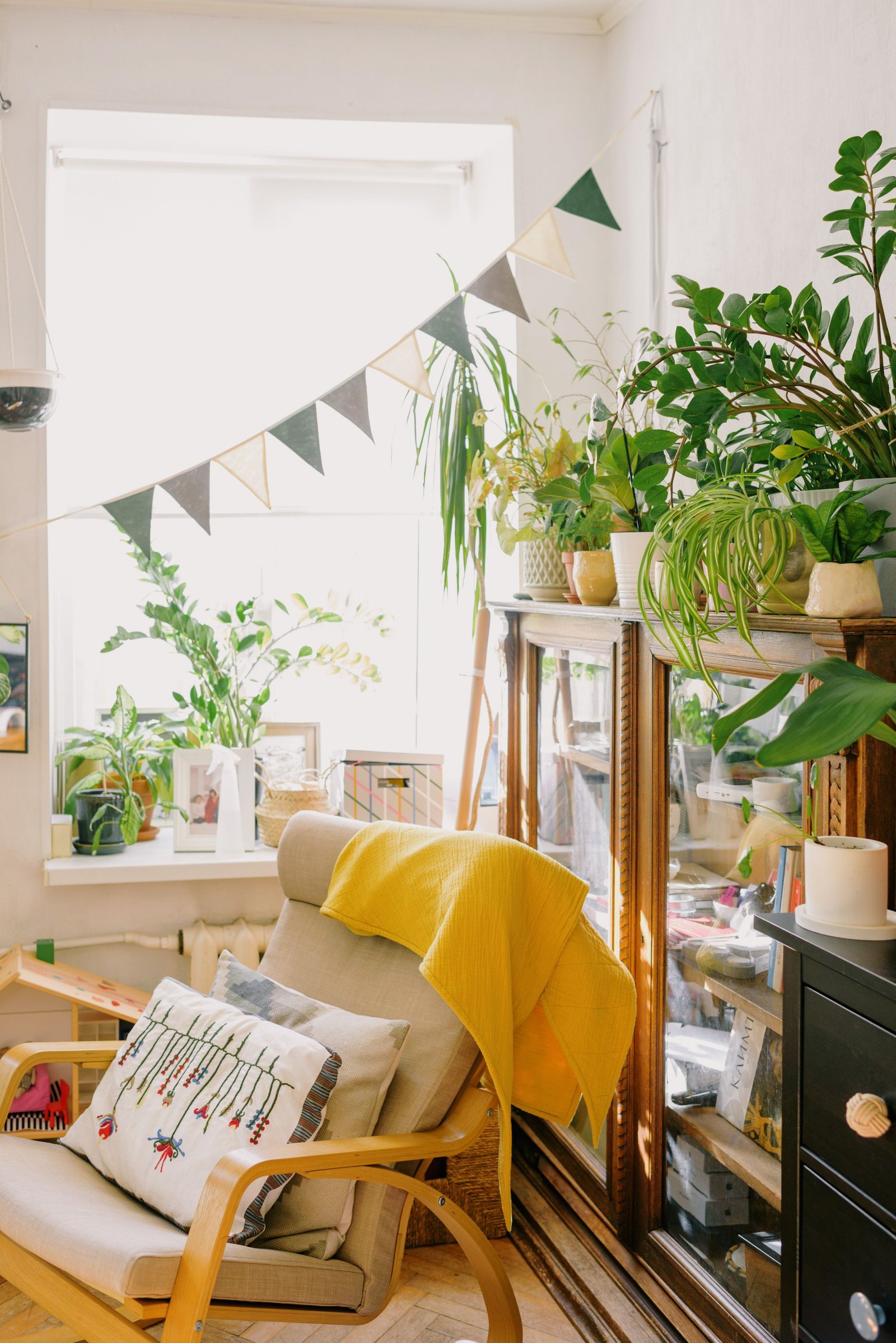
Choose plants suited to container culture and use pots with good drainage. Group containers with similar needs near a convenient water source.
Inspect containers during hot weather because they can dry much faster than garden beds.
Plan Seasonal Tasks
Not every garden task needs weekly attention. Divide maintenance into weekly, monthly, and seasonal categories.
Seasonal work may include adding mulch, dividing perennials, pruning particular shrubs, cleaning irrigation filters, checking supports, or preparing plants for heat or cold.
Keeping a simple calendar prevents several major jobs from accumulating at the same time.
Keep Tools Ready
Store the most-used tools where they are easy to reach. A hand pruner, gloves, small weeding tool, and watering equipment can cover many short maintenance sessions.
Clean and sharpen tools periodically. A tool that works properly makes quick garden care more efficient and safer.
Return tools to the same location after use so short maintenance sessions do not begin with searching.
Review What Creates the Most Work
At the end of each season, ask which plants or features required disproportionate effort. A repeatedly struggling plant, difficult hedge, or awkward bed may be a design problem rather than a maintenance failure.
Remove or redesign elements that consistently demand more time than they are worth. Low-maintenance gardening is partly about choosing what not to keep.
A garden becomes easier over time when each season teaches you where effort produces the best result.
Frequently Asked Questions
What is the fastest way to reduce garden maintenance?
Start with the tasks that repeat most often, such as weeding, watering, mowing, and pruning. Adjust the design so those tasks become less frequent.
Does mulch really save time?
Yes, when used correctly. It can reduce weeds and moisture loss, which lowers the amount of routine work.
Are low-maintenance gardens boring?
No. Repeated plant groups, varied textures, seasonal interest, and strong structure can create an attractive garden with fewer recurring tasks.
How often should I work in the garden?
Short weekly sessions combined with a few seasonal tasks are often enough for a well-designed low-maintenance garden.
Simplify Plant Variety
A large number of different species can create many separate care requirements. Repeating a smaller selection of reliable plants can simplify watering, pruning, feeding, and seasonal decisions while still creating visual richness through mass planting.
Use variation in height, texture, and flowering time within a limited palette instead of collecting a different species for every open space.
Simplify Plant Variety
A large number of different species can create many separate care requirements. Repeating a smaller selection of reliable plants can simplify watering, pruning, feeding, and seasonal decisions while still creating visual richness through mass planting.
Use variation in height, texture, and flowering time within a limited palette instead of collecting a different species for every open space.
Simplify Plant Variety
A large number of different species can create many separate care requirements. Repeating a smaller selection of reliable plants can simplify watering, pruning, feeding, and seasonal decisions while still creating visual richness through mass planting.
Use variation in height, texture, and flowering time within a limited palette instead of collecting a different species for every open space.
Simplify Plant Variety
A large number of different species can create many separate care requirements. Repeating a smaller selection of reliable plants can simplify watering, pruning, feeding, and seasonal decisions while still creating visual richness through mass planting.
Use variation in height, texture, and flowering time within a limited palette instead of collecting a different species for every open space.
Simplify Plant Variety
A large number of different species can create many separate care requirements. Repeating a smaller selection of reliable plants can simplify watering, pruning, feeding, and seasonal decisions while still creating visual richness through mass planting.
Use variation in height, texture, and flowering time within a limited palette instead of collecting a different species for every open space.
Simplify Plant Variety
A large number of different species can create many separate care requirements. Repeating a smaller selection of reliable plants can simplify watering, pruning, feeding, and seasonal decisions while still creating visual richness through mass planting.
Use variation in height, texture, and flowering time within a limited palette instead of collecting a different species for every open space.
Simplify Plant Variety
A large number of different species can create many separate care requirements. Repeating a smaller selection of reliable plants can simplify watering, pruning, feeding, and seasonal decisions while still creating visual richness through mass planting.
Use variation in height, texture, and flowering time within a limited palette instead of collecting a different species for every open space.
Simplify Plant Variety
A large number of different species can create many separate care requirements. Repeating a smaller selection of reliable plants can simplify watering, pruning, feeding, and seasonal decisions while still creating visual richness through mass planting.
Use variation in height, texture, and flowering time within a limited palette instead of collecting a different species for every open space.
Simplify Plant Variety
A large number of different species can create many separate care requirements. Repeating a smaller selection of reliable plants can simplify watering, pruning, feeding, and seasonal decisions while still creating visual richness through mass planting.
Use variation in height, texture, and flowering time within a limited palette instead of collecting a different species for every open space.
Simplify Plant Variety
A large number of different species can create many separate care requirements. Repeating a smaller selection of reliable plants can simplify watering, pruning, feeding, and seasonal decisions while still creating visual richness through mass planting.
Use variation in height, texture, and flowering time within a limited palette instead of collecting a different species for every open space.
Simplify Plant Variety
A large number of different species can create many separate care requirements. Repeating a smaller selection of reliable plants can simplify watering, pruning, feeding, and seasonal decisions while still creating visual richness through mass planting.
Use variation in height, texture, and flowering time within a limited palette instead of collecting a different species for every open space.
Simplify Plant Variety
A large number of different species can create many separate care requirements. Repeating a smaller selection of reliable plants can simplify watering, pruning, feeding, and seasonal decisions while still creating visual richness through mass planting.
Use variation in height, texture, and flowering time within a limited palette instead of collecting a different species for every open space.
Conclusion
Keeping a garden beautiful with limited time is mainly a matter of design and priorities. Choose resilient plants, simplify watering and edging, use mulch, reduce unnecessary lawn, and build a short routine that prevents small tasks from becoming large ones.
The easiest garden to maintain is not the one with no plants. It is the one where every element suits the site, mature size, and amount of care you can realistically provide.