
Follow us:

Practical ideas for a more beautiful home and a greener life.

Residential Landscaping

Deer-Resistant Flowering Shrubs for Residential Landscapes

Dwarf evergreen shrubs give small home gardens reliable structure and color in every season. Learn how to choose compact varieties for your USDA zone, light conditions, soil, and available space, then plant and maintain them for lasting results.
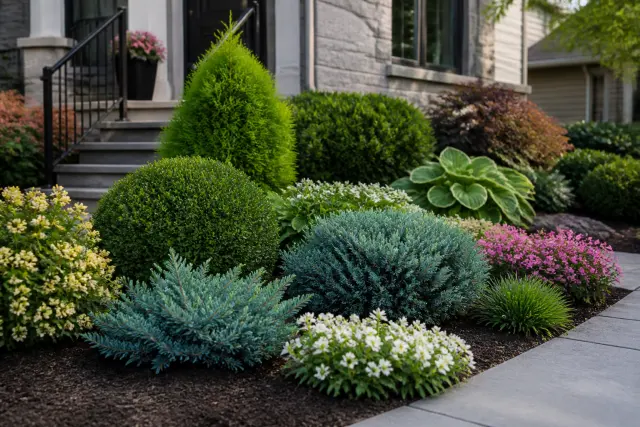
Dwarf evergreen shrubs in a layered small front-yard planting bed.

Introduction

Dwarf evergreen shrubs for small gardens do a great deal of work in a limited footprint. They hold a bed together when perennials are dormant, define walkways without blocking windows, and give front-yard plantings a finished look through winter. Many compact evergreens also fit beautifully beside patios, in narrow side beds, and in large containers.

The best choice is not simply the smallest plant at the garden center. It is a shrub whose mature height, mature width, winter hardiness, light needs, and soil preferences match the location. A shrub labeled “dwarf” may still reach 4 or 5 feet wide, while a truly compact selection may stay under 2 feet for many years. Plan for its eventual size rather than its nursery-pot size.

This guide focuses on reliable evergreen and broadleaf-evergreen choices for U.S. home landscapes, including a few flowering options. If deer visit your yard, treat deer resistance as a helpful trait rather than a guarantee: browsing pressure, local deer habits, and winter food shortages can change what deer will eat.
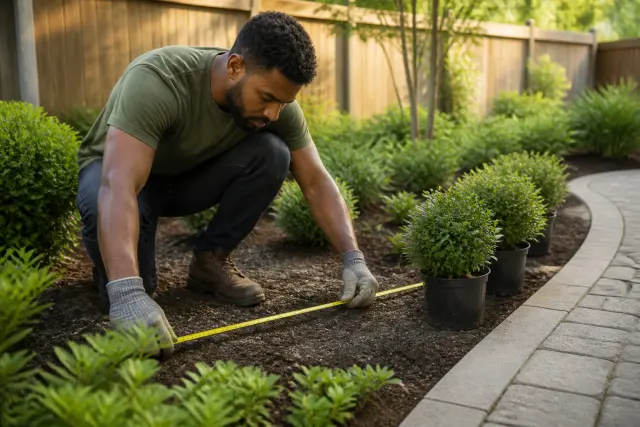
Gardener measuring spacing for dwarf evergreen shrubs in a small garden bed.
Measure the bed and plan around each shrub’s mature width before planting.

Why Dwarf Evergreen Shrubs Work Well in Small Gardens

Compact evergreen shrubs provide permanent structure without taking over a small bed. Their foliage creates a calm backdrop for spring bulbs, flowering annuals, ornamental grasses, and perennials. In a front yard, a low evergreen mound can soften a foundation edge while keeping sightlines open near paths and windows.

They make four-season planting easier

Evergreens retain foliage or needles year-round, so the garden does not look empty in winter. Use several shrubs with different textures—fine needles, glossy leaves, or soft scale-like sprays—rather than relying on one tightly clipped hedge. This adds interest while reducing the need for frequent shearing.

They suit manageable maintenance routines

A properly sited dwarf shrub usually needs less pruning, staking, dividing, and seasonal replacement than a fast-growing shrub. The key is spacing. Leaving room around each plant improves air circulation and prevents the crowded, overgrown look that leads to hard pruning later.

Deer-resistant does not mean deer-proof

Boxwood, juniper, spruce, and many aromatic evergreens are often less appealing to deer than tender broadleaf shrubs. However, hungry deer may sample almost any plant. Protect new shrubs with temporary fencing or repellents labeled for ornamental plants, especially during their first winter and in areas with regular browsing. Check local rules before installing fencing near sidewalks, property lines, or street corners.

How to Choose Shrubs by USDA Hardiness Zone

USDA Plant Hardiness Zones describe the average annual extreme minimum winter temperature in an area. Start with your zone, then read the plant label for its recommended zone range. A shrub hardy to Zone 5 may struggle in a Zone 4 winter, while a cold-adapted shrub may decline where summers are very hot and humid.

Use your yard's microclimates

A sheltered bed beside a wall may be warmer and less windy than an open front yard, but reflected heat can stress plants in summer. Low spots can collect cold air and stay wet in winter. Observe where snow melts first, where wind dries foliage, and which beds receive intense afternoon sun before selecting plants.

Consider heat and winter moisture too

Hardiness is only one filter. Many conifers prefer well-drained soil and can fail in standing winter water. Some broadleaf evergreens tolerate heat and humidity better than others. For the most dependable local recommendations, use your state university Extension service or a nearby public garden as a reference for plants proven in your region.

Measure Mature Height and Width Before You Buy

Before shopping, measure the planting area and write down its length, depth, and distance from the house, walk, driveway, or property line. Then compare those dimensions with the plant tag’s mature size. Do not assume a one-gallon shrub will remain small.

Simple spacing guidelines

  • Place a shrub at least half its expected mature width away from a walk, wall, or driveway.
  • For a loose grouping, space plants about their expected mature width apart, center to center.
  • For a low, gently touching mass, space them slightly closer, but do not force shrubs into a solid hedge unless the variety responds well to pruning.
  • Keep foliage clear of siding and leave access for weeding, mulching, and watering.

For example, a shrub expected to grow 3 feet wide needs its center about 18 inches from a path edge. In a bed only 3 feet deep, that may be too large. Choose a selection maturing around 18 to 24 inches wide instead.

Match Evergreen Shrubs to Full Sun, Part Shade, or Shade

Light levels strongly affect density, color, flowering, and disease resistance. “Full sun” generally means at least six hours of direct sun. “Part shade” is often four to six hours of sun or filtered light. Dense shade receives little direct sunlight and supports a much shorter list of evergreen shrubs.

Full-sun locations

Junipers, mugo pine, compact arborvitae, and many dwarf spruce selections perform best with six or more hours of sun. Good airflow and well-drained soil are especially important for conifers. In hot climates, even sun-loving shrubs can appreciate protection from harsh late-afternoon reflected heat.

Part-shade locations

Boxwood, Japanese holly, inkberry, dwarf mountain laurel, and compact rhododendrons often work well with morning sun and afternoon shade. Morning sun helps dry foliage after dew, which can reduce some leaf disease issues.

Shade locations

For bright or open shade, consider inkberry, some boxwoods, compact Japanese plum yew, or rhododendron selections suited to your zone. Few evergreen shrubs thrive in deep, dry shade beneath mature trees. Improve the odds by choosing a small plant, watering deeply during establishment, and avoiding root disturbance around established trees.
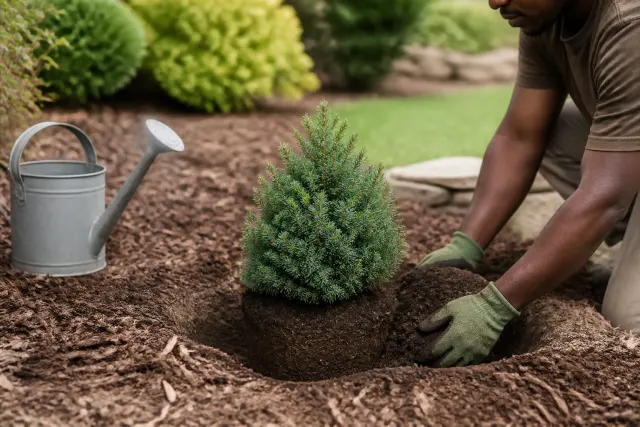
Proper planting and mulching technique for a compact evergreen shrub.
Set the root ball at the correct level and keep mulch away from stems.

15 Dwarf Evergreen Shrubs for Small Gardens

Sizes vary with climate, soil, and cultivar, so use this list as a planning guide and confirm the specific plant label before buying. “Evergreen” can mean needle evergreen, broadleaf evergreen, or semi-evergreen in colder parts of the stated range.

PlantTypical mature sizeLightApproximate USDA zonesUseful feature
‘Green Velvet’ boxwood2–4 ft. tall and wideSun to part shade5–8Rounded, classic broadleaf form
‘Winter Gem’ boxwood2–3 ft. tall and wideSun to part shade5–9Compact edging or foundation accent
‘Hetz’s Midget’ arborvitae3–4 ft. tall and wideFull sun3–8Dense globe shape
‘Mr. Bowling Ball’ arborvitae2–3 ft. tall and wideFull sun3–8Soft-textured, naturally rounded habit
‘Mops’ mugo pine3–5 ft. tall and wideFull sun2–7Rugged needles and winter form
‘Blue Star’ juniper2–3 ft. tall, 3–4 ft. wideFull sun4–8Blue-gray foliage
‘Gold Lace’ juniper3–4 ft. tall, 4–5 ft. wideFull sun4–9Gold-tipped foliage; use where width allows
‘Nidiformis’ bird’s nest spruce3–4 ft. tall, 4–6 ft. wideFull sun3–7Low, nest-like center
‘Jean’s Dilly’ Alberta spruce3–5 ft. tall, 2–3 ft. wideSun to part sun3–8Narrow, slow-growing cone
‘Soft Serve’ false cypress6–10 ft. tall, 5–6 ft. wideSun to part sun4–8For small yards needing a taller focal point
‘Shamrock’ inkberry holly3–4 ft. tall and wideSun to part shade4–9Native-region-friendly broadleaf evergreen
‘Schwoebel’s Compact’ inkberry holly3–4 ft. tall and wideSun to part shade4–9Dense foliage for moist, acidic soils
‘Nana’ Japanese holly2–3 ft. tall and wideSun to part shade6–9Small-leaved, tidy mound
‘PJM’ rhododendron3–5 ft. tall and widePart shade4–8Lavender-pink spring flowers; broadleaf evergreen
‘Minuet’ mountain laurel3–5 ft. tall and widePart shade4–9Showy late-spring flowers in acidic soil

Arborvitae and false cypress can develop winter burn in exposed sites. Boxwood is vulnerable to boxwood blight in some regions, so buy healthy plants, avoid overhead watering, sanitize pruning tools, and do not crowd plantings. Mountain laurel and rhododendron need acidic, well-drained soil; they are poor choices for alkaline ground unless a soil test and an appropriate planting plan support them.

Best Compact Evergreens for Front Yard Foundation Beds

Foundation beds need shrubs that look intentional without covering windows, vents, utility access, or the lower portion of the house. Start with a low layer near the front of the bed, then use one or two taller accents only where there is adequate depth.

Reliable combinations

For sunny beds, pair ‘Blue Star’ juniper with a globe arborvitae and drought-tolerant flowering perennials. For part shade, use rounded boxwoods or inkberries with ferns, hellebores, and spring bulbs. A single narrow ‘Jean’s Dilly’ Alberta spruce can create a vertical accent at a bed corner, but avoid placing it where snow piles or roof runoff will bury it.

Avoid a row of identical shrubs packed tightly against the foundation. A staggered arrangement with mulch between plants looks more natural, makes irrigation easier, and gives each shrub space to reach its mature form.

Dwarf Evergreen Shrubs for Containers and Patio Planters

Containers let renters and homeowners add evergreen structure to patios, balconies, and entry gardens, but roots in pots experience more heat, cold, and drying than roots in the ground. Choose a container with drainage holes, use a high-quality potting mix rather than native soil, and select a shrub that is hardy at least one or two zones colder than your local zone when it will remain outdoors year-round.

Good container candidates

Slow-growing boxwood, compact Japanese holly in warm zones, dwarf Alberta spruce, small junipers, and young mugo pines can work in large outdoor containers. Match the pot to the shrub’s future root system; a heavy, frost-resistant container is safer in windy locations.

Water whenever the mix is dry several inches below the surface, then allow excess water to drain. In cold-winter regions, cluster pots in a protected spot, insulate the outside of pots if practical, and water during winter thaws when the soil is not frozen. Never leave a saucer full of water beneath an outdoor shrub pot.

How to Plant Dwarf Evergreen Shrubs Successfully

Plant in spring or early fall when temperatures are moderate and the soil is workable. Fall planting is helpful in many regions because roots can establish in cool soil, but allow enough time before hard freezing and keep watering as needed.

Planting steps

  1. Call 811 before digging in the United States so underground utility lines can be marked.
  2. Dig a hole two to three times as wide as the root ball and no deeper than the root ball.
  3. Slide the shrub from its pot and inspect roots. Loosen circling roots gently; if they are tightly matted, make a few shallow vertical cuts through the outer root mass.
  4. Set the plant so the top of the root ball sits level with, or slightly above, the surrounding soil. Do not bury the trunk flare.
  5. Backfill with the native soil unless a soil test or local Extension guidance indicates a specific amendment is needed. Firm lightly and water slowly.
  6. Spread a 2- to 3-inch mulch layer over the root zone, keeping mulch several inches away from stems.

Do not add gravel to the bottom of the hole; it can interfere with water movement. If the site stays soggy after rain, choose a moisture-tolerant shrub or create a raised planting area rather than trying to force a drought-loving conifer into wet ground.

Watering, Mulching, and Fertilizing New Shrubs

Newly planted shrubs need consistent moisture until their roots grow into surrounding soil. For the first growing season, check moisture once or twice a week and water deeply when the root zone is beginning to dry. Sandy soil dries more quickly than clay, while heavy clay requires slower watering to prevent runoff.

Use mulch as a moisture tool

Shredded bark, pine bark, or leaf mulch helps moderate soil temperature, reduce weeds, and conserve moisture. Keep the layer loose and no deeper than 3 inches. Mulch piled against stems holds moisture where it is not wanted and can encourage decay or rodent damage.

Fertilize only when there is a reason

Most shrubs do not need routine fertilizer in reasonably fertile soil. Overfertilizing can cause weak, overly fast growth and may worsen winter damage. If growth is sparse or leaves are pale, begin with a soil test and consider whether poor drainage, incorrect pH, root competition, or insufficient light is the true issue. Apply a product only according to its label and local guidance.

When and How to Prune Compact Evergreen Shrubs

The advantage of dwarf shrubs is that they should need little pruning. Remove dead, damaged, rubbing, or diseased branches whenever you notice them, using clean, sharp hand pruners. For shape, make selective cuts that preserve the shrub’s natural form instead of shearing every surface into a tight ball.

Know the plant before cutting

Boxwood and Japanese holly generally tolerate light shaping in late spring after new growth begins, with a final light trim early enough for new growth to harden before winter. Arborvitae, juniper, spruce, and many other conifers do not reliably regrow from old, leafless brown wood. Never cut deep into bare interior wood expecting it to fill back in.

Pinch or shorten the soft “candles” on mugo pine in spring to limit growth without cutting into old needles. For flowering broadleaf evergreens such as rhododendron and mountain laurel, prune just after flowering if needed; late pruning can remove next year’s flower buds.

Common Problems: Winter Burn, Yellowing, Pests, and Overcrowding

Winter burn

Evergreen foliage loses moisture on sunny, windy winter days when roots cannot take up enough frozen water. Browning often appears on exposed sides in late winter or early spring. Water deeply in fall before the ground freezes, mulch the root zone, and use a breathable wind screen for vulnerable shrubs in exposed locations. Avoid wrapping foliage tightly in plastic.

Yellowing foliage

Yellowing may result from overwatering, compacted soil, alkaline soil, nutrient imbalance, root damage, or natural seasonal needle drop on conifers. Check soil moisture before adding fertilizer. On junipers and pines, some inner needle browning in fall is normal; browning at shoot tips or widespread dieback is not.

Pests and disease

Spider mites may cause fine stippling and webbing on stressed conifers, while scale insects can affect euonymus, holly, and other broadleaf evergreens. Inspect stems and leaf undersides regularly. A strong spray of water can dislodge some pests; for persistent infestations, identify the pest before using horticultural soap or oil, and follow the product label carefully. Do not spray during heat, drought stress, or when plants are in direct hot sun unless the label specifically permits it.

Overcrowding and poor drainage

If mature shrubs touch too closely, prune selectively or transplant a young shrub before the problem worsens. If a plant repeatedly declines in wet soil, replacement with a shrub suited to that moisture level is usually more successful than repeated fertilizer or pesticide applications. Contact a local Extension office or certified arborist when a valuable mature shrub has sudden dieback, extensive root problems, or suspected serious disease.
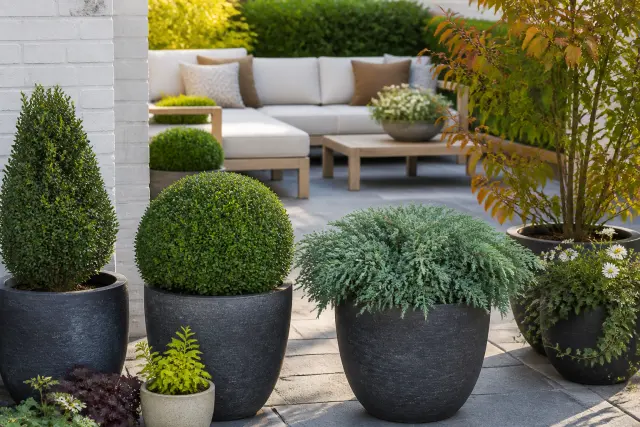
Compact evergreen shrubs growing in patio containers.
Large containers with drainage can bring evergreen structure to patios and small outdoor spaces.

Conclusion

Dwarf evergreen shrubs for small gardens are long-term plants, so choosing carefully at the beginning pays off for years. Start with your USDA zone, actual light, drainage, and the mature width the bed can support. Then select shrubs with different foliage textures and heights rather than planting too many of one type.

Give each new shrub a wide planting hole, steady moisture during establishment, a sensible mulch layer, and room to grow. With those basics in place, compact evergreens can anchor a front-yard bed, frame a patio, and keep a small landscape attractive in every season.

Frequently Asked Questions

What are the lowest-maintenance dwarf evergreen shrubs for a small sunny yard?

Dwarf junipers, mugo pine, bird’s nest spruce, and compact arborvitae can be low-maintenance choices in full sun when planted in well-drained soil. Choose a cultivar whose mature dimensions fit the site so regular pruning is unnecessary.

Which dwarf evergreen shrubs are best for shade?

Inkberry holly, some boxwoods, Japanese plum yew, and compact rhododendrons can handle part shade or bright shade, depending on cultivar and zone. Deep, dry shade is challenging for most evergreen shrubs, so improve moisture during establishment and check each plant’s light requirements.

Are dwarf evergreen shrubs deer resistant?

Some, including juniper, spruce, boxwood, and mugo pine, are often less favored by deer. No shrub is completely deer-proof, particularly where deer pressure is high or winter food is limited. Protect newly planted shrubs with physical barriers or labeled repellents.

How far apart should I plant dwarf evergreen shrubs?

For a natural grouping, space shrubs about as far apart as their expected mature width, measured from center to center. For example, two shrubs that mature 3 feet wide should generally be planted about 3 feet apart. Adjust slightly for a planned low hedge, but do not overcrowd them.

Can dwarf evergreen shrubs stay outdoors in containers over winter?

Yes, but container roots are less protected from cold than in-ground roots. Use a large frost-resistant pot with drainage, select plants hardy one or two zones colder than your area when possible, protect pots from wind, and water during winter thaws when the potting mix is dry.

Why is my evergreen shrub turning brown after winter?

Winter burn is a common cause, especially on exposed sides of arborvitae, boxwood, and some conifers. Frozen soil prevents roots from replacing water lost from foliage in wind and sun. Fall watering, mulch, and a breathable windbreak can help prevent repeat damage.

Residential Landscaping

Deer-Resistant Flowering Shrubs for Residential Landscapes

Dwarf evergreen shrubs give small home gardens reliable structure and color in every season. Learn how to choose compact varieties for your USDA zone, light conditions, soil, and available space, then plant and maintain them for lasting results.

Dwarf evergreen shrubs in a layered small front-yard planting bed.

Introduction

Dwarf evergreen shrubs for small gardens do a great deal of work in a limited footprint. They hold a bed together when perennials are dormant, define walkways without blocking windows, and give front-yard plantings a finished look through winter. Many compact evergreens also fit beautifully beside patios, in narrow side beds, and in large containers.

The best choice is not simply the smallest plant at the garden center. It is a shrub whose mature height, mature width, winter hardiness, light needs, and soil preferences match the location. A shrub labeled “dwarf” may still reach 4 or 5 feet wide, while a truly compact selection may stay under 2 feet for many years. Plan for its eventual size rather than its nursery-pot size.

This guide focuses on reliable evergreen and broadleaf-evergreen choices for U.S. home landscapes, including a few flowering options. If deer visit your yard, treat deer resistance as a helpful trait rather than a guarantee: browsing pressure, local deer habits, and winter food shortages can change what deer will eat.

Gardener measuring spacing for dwarf evergreen shrubs in a small garden bed.
Measure the bed and plan around each shrub’s mature width before planting.

Why Dwarf Evergreen Shrubs Work Well in Small Gardens

Compact evergreen shrubs provide permanent structure without taking over a small bed. Their foliage creates a calm backdrop for spring bulbs, flowering annuals, ornamental grasses, and perennials. In a front yard, a low evergreen mound can soften a foundation edge while keeping sightlines open near paths and windows.

They make four-season planting easier

Evergreens retain foliage or needles year-round, so the garden does not look empty in winter. Use several shrubs with different textures—fine needles, glossy leaves, or soft scale-like sprays—rather than relying on one tightly clipped hedge. This adds interest while reducing the need for frequent shearing.

They suit manageable maintenance routines

A properly sited dwarf shrub usually needs less pruning, staking, dividing, and seasonal replacement than a fast-growing shrub. The key is spacing. Leaving room around each plant improves air circulation and prevents the crowded, overgrown look that leads to hard pruning later.

Deer-resistant does not mean deer-proof

Boxwood, juniper, spruce, and many aromatic evergreens are often less appealing to deer than tender broadleaf shrubs. However, hungry deer may sample almost any plant. Protect new shrubs with temporary fencing or repellents labeled for ornamental plants, especially during their first winter and in areas with regular browsing. Check local rules before installing fencing near sidewalks, property lines, or street corners.

How to Choose Shrubs by USDA Hardiness Zone

USDA Plant Hardiness Zones describe the average annual extreme minimum winter temperature in an area. Start with your zone, then read the plant label for its recommended zone range. A shrub hardy to Zone 5 may struggle in a Zone 4 winter, while a cold-adapted shrub may decline where summers are very hot and humid.

Use your yard's microclimates

A sheltered bed beside a wall may be warmer and less windy than an open front yard, but reflected heat can stress plants in summer. Low spots can collect cold air and stay wet in winter. Observe where snow melts first, where wind dries foliage, and which beds receive intense afternoon sun before selecting plants.

Consider heat and winter moisture too

Hardiness is only one filter. Many conifers prefer well-drained soil and can fail in standing winter water. Some broadleaf evergreens tolerate heat and humidity better than others. For the most dependable local recommendations, use your state university Extension service or a nearby public garden as a reference for plants proven in your region.

Measure Mature Height and Width Before You Buy

Before shopping, measure the planting area and write down its length, depth, and distance from the house, walk, driveway, or property line. Then compare those dimensions with the plant tag’s mature size. Do not assume a one-gallon shrub will remain small.

Simple spacing guidelines

  • Place a shrub at least half its expected mature width away from a walk, wall, or driveway.
  • For a loose grouping, space plants about their expected mature width apart, center to center.
  • For a low, gently touching mass, space them slightly closer, but do not force shrubs into a solid hedge unless the variety responds well to pruning.
  • Keep foliage clear of siding and leave access for weeding, mulching, and watering.

For example, a shrub expected to grow 3 feet wide needs its center about 18 inches from a path edge. In a bed only 3 feet deep, that may be too large. Choose a selection maturing around 18 to 24 inches wide instead.

Match Evergreen Shrubs to Full Sun, Part Shade, or Shade

Light levels strongly affect density, color, flowering, and disease resistance. “Full sun” generally means at least six hours of direct sun. “Part shade” is often four to six hours of sun or filtered light. Dense shade receives little direct sunlight and supports a much shorter list of evergreen shrubs.

Full-sun locations

Junipers, mugo pine, compact arborvitae, and many dwarf spruce selections perform best with six or more hours of sun. Good airflow and well-drained soil are especially important for conifers. In hot climates, even sun-loving shrubs can appreciate protection from harsh late-afternoon reflected heat.

Part-shade locations

Boxwood, Japanese holly, inkberry, dwarf mountain laurel, and compact rhododendrons often work well with morning sun and afternoon shade. Morning sun helps dry foliage after dew, which can reduce some leaf disease issues.

Shade locations

For bright or open shade, consider inkberry, some boxwoods, compact Japanese plum yew, or rhododendron selections suited to your zone. Few evergreen shrubs thrive in deep, dry shade beneath mature trees. Improve the odds by choosing a small plant, watering deeply during establishment, and avoiding root disturbance around established trees.

Proper planting and mulching technique for a compact evergreen shrub.
Set the root ball at the correct level and keep mulch away from stems.

15 Dwarf Evergreen Shrubs for Small Gardens

Sizes vary with climate, soil, and cultivar, so use this list as a planning guide and confirm the specific plant label before buying. “Evergreen” can mean needle evergreen, broadleaf evergreen, or semi-evergreen in colder parts of the stated range.

PlantTypical mature sizeLightApproximate USDA zonesUseful feature
‘Green Velvet’ boxwood2–4 ft. tall and wideSun to part shade5–8Rounded, classic broadleaf form
‘Winter Gem’ boxwood2–3 ft. tall and wideSun to part shade5–9Compact edging or foundation accent
‘Hetz’s Midget’ arborvitae3–4 ft. tall and wideFull sun3–8Dense globe shape
‘Mr. Bowling Ball’ arborvitae2–3 ft. tall and wideFull sun3–8Soft-textured, naturally rounded habit
‘Mops’ mugo pine3–5 ft. tall and wideFull sun2–7Rugged needles and winter form
‘Blue Star’ juniper2–3 ft. tall, 3–4 ft. wideFull sun4–8Blue-gray foliage
‘Gold Lace’ juniper3–4 ft. tall, 4–5 ft. wideFull sun4–9Gold-tipped foliage; use where width allows
‘Nidiformis’ bird’s nest spruce3–4 ft. tall, 4–6 ft. wideFull sun3–7Low, nest-like center
‘Jean’s Dilly’ Alberta spruce3–5 ft. tall, 2–3 ft. wideSun to part sun3–8Narrow, slow-growing cone
‘Soft Serve’ false cypress6–10 ft. tall, 5–6 ft. wideSun to part sun4–8For small yards needing a taller focal point
‘Shamrock’ inkberry holly3–4 ft. tall and wideSun to part shade4–9Native-region-friendly broadleaf evergreen
‘Schwoebel’s Compact’ inkberry holly3–4 ft. tall and wideSun to part shade4–9Dense foliage for moist, acidic soils
‘Nana’ Japanese holly2–3 ft. tall and wideSun to part shade6–9Small-leaved, tidy mound
‘PJM’ rhododendron3–5 ft. tall and widePart shade4–8Lavender-pink spring flowers; broadleaf evergreen
‘Minuet’ mountain laurel3–5 ft. tall and widePart shade4–9Showy late-spring flowers in acidic soil

Arborvitae and false cypress can develop winter burn in exposed sites. Boxwood is vulnerable to boxwood blight in some regions, so buy healthy plants, avoid overhead watering, sanitize pruning tools, and do not crowd plantings. Mountain laurel and rhododendron need acidic, well-drained soil; they are poor choices for alkaline ground unless a soil test and an appropriate planting plan support them.

Best Compact Evergreens for Front Yard Foundation Beds

Foundation beds need shrubs that look intentional without covering windows, vents, utility access, or the lower portion of the house. Start with a low layer near the front of the bed, then use one or two taller accents only where there is adequate depth.

Reliable combinations

For sunny beds, pair ‘Blue Star’ juniper with a globe arborvitae and drought-tolerant flowering perennials. For part shade, use rounded boxwoods or inkberries with ferns, hellebores, and spring bulbs. A single narrow ‘Jean’s Dilly’ Alberta spruce can create a vertical accent at a bed corner, but avoid placing it where snow piles or roof runoff will bury it.

Avoid a row of identical shrubs packed tightly against the foundation. A staggered arrangement with mulch between plants looks more natural, makes irrigation easier, and gives each shrub space to reach its mature form.

Dwarf Evergreen Shrubs for Containers and Patio Planters

Containers let renters and homeowners add evergreen structure to patios, balconies, and entry gardens, but roots in pots experience more heat, cold, and drying than roots in the ground. Choose a container with drainage holes, use a high-quality potting mix rather than native soil, and select a shrub that is hardy at least one or two zones colder than your local zone when it will remain outdoors year-round.

Good container candidates

Slow-growing boxwood, compact Japanese holly in warm zones, dwarf Alberta spruce, small junipers, and young mugo pines can work in large outdoor containers. Match the pot to the shrub’s future root system; a heavy, frost-resistant container is safer in windy locations.

Water whenever the mix is dry several inches below the surface, then allow excess water to drain. In cold-winter regions, cluster pots in a protected spot, insulate the outside of pots if practical, and water during winter thaws when the soil is not frozen. Never leave a saucer full of water beneath an outdoor shrub pot.

How to Plant Dwarf Evergreen Shrubs Successfully

Plant in spring or early fall when temperatures are moderate and the soil is workable. Fall planting is helpful in many regions because roots can establish in cool soil, but allow enough time before hard freezing and keep watering as needed.

Planting steps

  1. Call 811 before digging in the United States so underground utility lines can be marked.
  2. Dig a hole two to three times as wide as the root ball and no deeper than the root ball.
  3. Slide the shrub from its pot and inspect roots. Loosen circling roots gently; if they are tightly matted, make a few shallow vertical cuts through the outer root mass.
  4. Set the plant so the top of the root ball sits level with, or slightly above, the surrounding soil. Do not bury the trunk flare.
  5. Backfill with the native soil unless a soil test or local Extension guidance indicates a specific amendment is needed. Firm lightly and water slowly.
  6. Spread a 2- to 3-inch mulch layer over the root zone, keeping mulch several inches away from stems.

Do not add gravel to the bottom of the hole; it can interfere with water movement. If the site stays soggy after rain, choose a moisture-tolerant shrub or create a raised planting area rather than trying to force a drought-loving conifer into wet ground.

Watering, Mulching, and Fertilizing New Shrubs

Newly planted shrubs need consistent moisture until their roots grow into surrounding soil. For the first growing season, check moisture once or twice a week and water deeply when the root zone is beginning to dry. Sandy soil dries more quickly than clay, while heavy clay requires slower watering to prevent runoff.

Use mulch as a moisture tool

Shredded bark, pine bark, or leaf mulch helps moderate soil temperature, reduce weeds, and conserve moisture. Keep the layer loose and no deeper than 3 inches. Mulch piled against stems holds moisture where it is not wanted and can encourage decay or rodent damage.

Fertilize only when there is a reason

Most shrubs do not need routine fertilizer in reasonably fertile soil. Overfertilizing can cause weak, overly fast growth and may worsen winter damage. If growth is sparse or leaves are pale, begin with a soil test and consider whether poor drainage, incorrect pH, root competition, or insufficient light is the true issue. Apply a product only according to its label and local guidance.

When and How to Prune Compact Evergreen Shrubs

The advantage of dwarf shrubs is that they should need little pruning. Remove dead, damaged, rubbing, or diseased branches whenever you notice them, using clean, sharp hand pruners. For shape, make selective cuts that preserve the shrub’s natural form instead of shearing every surface into a tight ball.

Know the plant before cutting

Boxwood and Japanese holly generally tolerate light shaping in late spring after new growth begins, with a final light trim early enough for new growth to harden before winter. Arborvitae, juniper, spruce, and many other conifers do not reliably regrow from old, leafless brown wood. Never cut deep into bare interior wood expecting it to fill back in.

Pinch or shorten the soft “candles” on mugo pine in spring to limit growth without cutting into old needles. For flowering broadleaf evergreens such as rhododendron and mountain laurel, prune just after flowering if needed; late pruning can remove next year’s flower buds.

Common Problems: Winter Burn, Yellowing, Pests, and Overcrowding

Winter burn

Evergreen foliage loses moisture on sunny, windy winter days when roots cannot take up enough frozen water. Browning often appears on exposed sides in late winter or early spring. Water deeply in fall before the ground freezes, mulch the root zone, and use a breathable wind screen for vulnerable shrubs in exposed locations. Avoid wrapping foliage tightly in plastic.

Yellowing foliage

Yellowing may result from overwatering, compacted soil, alkaline soil, nutrient imbalance, root damage, or natural seasonal needle drop on conifers. Check soil moisture before adding fertilizer. On junipers and pines, some inner needle browning in fall is normal; browning at shoot tips or widespread dieback is not.

Pests and disease

Spider mites may cause fine stippling and webbing on stressed conifers, while scale insects can affect euonymus, holly, and other broadleaf evergreens. Inspect stems and leaf undersides regularly. A strong spray of water can dislodge some pests; for persistent infestations, identify the pest before using horticultural soap or oil, and follow the product label carefully. Do not spray during heat, drought stress, or when plants are in direct hot sun unless the label specifically permits it.

Overcrowding and poor drainage

If mature shrubs touch too closely, prune selectively or transplant a young shrub before the problem worsens. If a plant repeatedly declines in wet soil, replacement with a shrub suited to that moisture level is usually more successful than repeated fertilizer or pesticide applications. Contact a local Extension office or certified arborist when a valuable mature shrub has sudden dieback, extensive root problems, or suspected serious disease.

Frequently Asked Questions

What are the lowest-maintenance dwarf evergreen shrubs for a small sunny yard?

Dwarf junipers, mugo pine, bird’s nest spruce, and compact arborvitae can be low-maintenance choices in full sun when planted in well-drained soil. Choose a cultivar whose mature dimensions fit the site so regular pruning is unnecessary.

Which dwarf evergreen shrubs are best for shade?

Inkberry holly, some boxwoods, Japanese plum yew, and compact rhododendrons can handle part shade or bright shade, depending on cultivar and zone. Deep, dry shade is challenging for most evergreen shrubs, so improve moisture during establishment and check each plant’s light requirements.

Are dwarf evergreen shrubs deer resistant?

Some, including juniper, spruce, boxwood, and mugo pine, are often less favored by deer. No shrub is completely deer-proof, particularly where deer pressure is high or winter food is limited. Protect newly planted shrubs with physical barriers or labeled repellents.

How far apart should I plant dwarf evergreen shrubs?

For a natural grouping, space shrubs about as far apart as their expected mature width, measured from center to center. For example, two shrubs that mature 3 feet wide should generally be planted about 3 feet apart. Adjust slightly for a planned low hedge, but do not overcrowd them.

Can dwarf evergreen shrubs stay outdoors in containers over winter?

Yes, but container roots are less protected from cold than in-ground roots. Use a large frost-resistant pot with drainage, select plants hardy one or two zones colder than your area when possible, protect pots from wind, and water during winter thaws when the potting mix is dry.

Why is my evergreen shrub turning brown after winter?

Winter burn is a common cause, especially on exposed sides of arborvitae, boxwood, and some conifers. Frozen soil prevents roots from replacing water lost from foliage in wind and sun. Fall watering, mulch, and a breathable windbreak can help prevent repeat damage.

Compact evergreen shrubs growing in patio containers.
Large containers with drainage can bring evergreen structure to patios and small outdoor spaces.

Conclusion

Dwarf evergreen shrubs for small gardens are long-term plants, so choosing carefully at the beginning pays off for years. Start with your USDA zone, actual light, drainage, and the mature width the bed can support. Then select shrubs with different foliage textures and heights rather than planting too many of one type.

Give each new shrub a wide planting hole, steady moisture during establishment, a sensible mulch layer, and room to grow. With those basics in place, compact evergreens can anchor a front-yard bed, frame a patio, and keep a small landscape attractive in every season.