
How to Choose the Right Area Rug
Learn how to choose an area rug that fits your room, furniture layout, lifestyle, and design style, from measuring and material choices to safe placement and long-term care.
Introduction
An area rug can make a room feel grounded, warmer, and more intentional—but only when its size, placement, and material suit the way you live. A rug that is too small often makes a furnished room look disconnected. One that is too large can crowd pathways, cover a beautiful floor unnecessarily, or create awkward door-clearance problems. The goal is not simply to find a pattern you like. It is to choose a rug that supports the room’s layout and everyday use.
If you are wondering how to choose an area rug, begin with function rather than color. Think about who uses the space, where people walk, whether pets or children are involved, how much direct sun reaches the floor, and how often you are realistically willing to clean it. Then use those answers to narrow the right dimensions, construction, fiber, and finish.
This guide walks through a practical order of decisions. By measuring first and shopping second, you can avoid a common decorating mistake: buying a rug that looks appealing online or in a showroom but does not work once it is under your furniture.
1. Start With the Room’s Job
Before looking at samples, define what the room needs the rug to do. In a formal sitting room, the rug may primarily unify furniture and add softness. In a busy family room, it may need to handle snack crumbs, muddy paws, toys, and regular vacuuming. A bedroom rug should feel pleasant under bare feet, while a dining-room rug needs a low enough surface for chairs to move easily.
Identify traffic and daily use
Walk through the room mentally from each entrance. Mark the routes people naturally take to the sofa, kitchen, hallway, patio door, or bathroom. High-traffic paths call for durable fibers, a stable rug pad, and patterns or heathered colors that are forgiving between cleanings. Delicate high-pile rugs, long fringe, and very light solid colors are usually better reserved for low-traffic spaces.
Also consider pets and children without assuming every practical choice must look utilitarian. A medium-tone, subtly patterned rug can disguise ordinary wear. A low-pile, tightly constructed rug is easier to vacuum and less likely to collect embedded debris than a deep shag. For a home with allergy concerns, choose a rug that can be vacuumed thoroughly and follow the manufacturer’s cleaning directions.
Set a realistic priority
Most rooms require a compromise among softness, price, stain resistance, natural fibers, and longevity. Put your top two priorities in writing. For example, a busy entry may prioritize easy cleaning and durability, while a primary bedroom may prioritize texture and comfort. This simple step keeps a beautiful but impractical rug from becoming an expensive regret.
2. Measure the Room Before You Shop
A tape measure is the most useful rug-shopping tool. Measure the open floor area, the furniture footprint, the distance between furnishings, and the clearance at doors. Record measurements in feet and inches, then draw a simple floor plan. It does not need to be polished; a sketch showing walls, doors, vents, built-ins, and furniture positions is enough to make sizing decisions clearer.
Leave an intentional floor border
In many rooms, leaving a visible border of flooring around the rug makes the layout feel balanced. The amount depends on the room and its proportions, but consistency matters more than following one universal number. A small room may need a narrower border to avoid making the rug seem undersized, while a large room can accommodate more exposed floor.
Watch for practical constraints. Measure swinging doors, closet doors, exterior doors, and low-clearance cabinet doors. A thick rug can prevent a door from opening freely or cause it to scrape. In entryways, a flatwoven or low-pile option may be a better fit than a plush rug. Do not place a rug where it blocks a floor register or creates an unstable surface at the top or bottom of stairs.
3. Choose the Right Living Room Rug Size
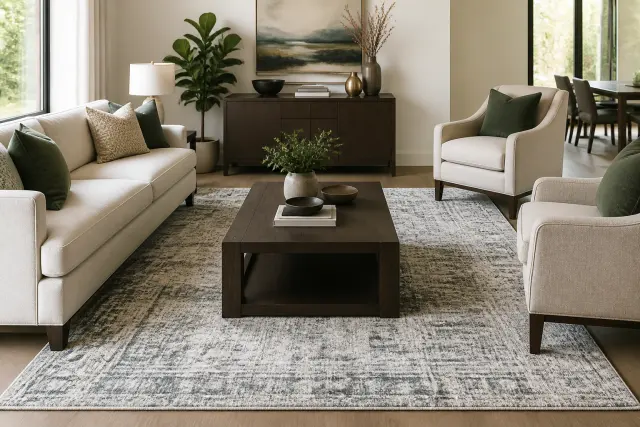
Living rooms are where undersized rugs are most noticeable. The rug should visually connect the seating arrangement, not sit like a small island in the center of the room. In a typical conversational grouping, aim to have at least the front legs of the sofa and chairs resting on the rug. This creates a cohesive zone and gives the furniture a settled appearance.
Use one of three proven layouts
- All furniture legs on the rug: Best for larger rooms and generously sized seating groups. Leave enough rug beyond the furniture edges to look deliberate.
- Front legs on the rug: A versatile choice for many average-size living rooms. The rug reaches under the front portion of the sofa and chairs while rear legs remain on the floor.
- Furniture fully off the rug: Appropriate only when a large coffee-table-area rug is clearly a decorative accent. It generally works better in small rooms with limited furniture than in an open living room.
Standard rug dimensions such as 5-by-8, 6-by-9, 8-by-10, 9-by-12, and 10-by-14 feet are useful starting points, not rules. Use painter’s tape to outline candidate sizes on the floor. Stand at room entrances and sit on the sofa to see whether the proportions feel right. This inexpensive test is far more reliable than trying to estimate scale from a product photo.
4. Plan Rug Placement Around Furniture
Once you know the rug’s outer dimensions, plan what will sit on it. The relationship between a rug and furniture matters as much as the rug’s size. A coffee table should sit comfortably inside the rug area, with enough exposed rug around it to frame the table. Side tables may sit fully on the rug or just beyond its edge, as long as the arrangement does not look accidental.
Maintain clear walking paths
Keep major paths open and stable. In a seating area, people should be able to walk around a coffee table without catching a foot on a rug corner. In an open-plan home, use rugs to define zones, but leave a natural route between the kitchen, dining area, and living area. A rug should organize traffic rather than force people to step over furniture or squeeze between edges.
For sectional sofas, a larger rectangular rug often works well when it reaches beneath the sectional’s front edge and extends into the open area. If the seating arrangement is compact or curved, a round or oval rug may better echo the shape. The key is to make the rug look connected to the seating rather than centered only under the coffee table.
5. Size Rugs for Dining Rooms, Bedrooms, and Hallways
Each room has a different sizing logic. In a dining room, the rug should be large enough that chairs remain on it when pulled back from the table. Measure the table at its widest point, including leaves you commonly use, then allow generous room around the perimeter for chair movement. A rug that catches chair legs at the edge will be frustrating every day.
Bedroom layouts that feel balanced
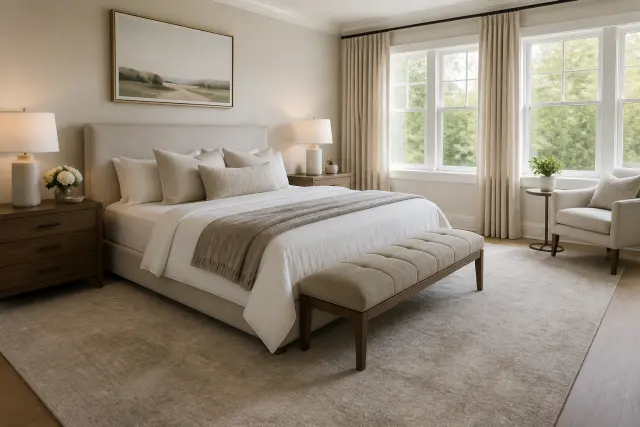
For a rug under a bed, select a size that extends beyond both sides and the foot of the bed, creating a soft landing zone when you get up. In a smaller bedroom, runners on each side of the bed can provide comfort without covering much of the floor. Another option is placing a rug perpendicular to the bed, beginning partway beneath it and extending beyond the foot.
Hallways and kitchens typically need runners. Measure the available length and width, leaving a consistent reveal of floor around the edges. Avoid runners that end exactly at a doorway threshold or are so narrow that they look stranded in the middle of the hall. In a galley kitchen, place the runner where you stand most often, such as along the sink and prep area, while keeping it clear of appliance doors.
| Room | Placement goal | Key measurement |
|---|---|---|
| Dining room | Chairs stay on the rug when pulled out | Table footprint plus chair clearance |
| Bedroom | Soft landing around the bed | Bed width and open space at sides and foot |
| Hallway | Center the runner with visible floor borders | Clear width, length, and door swings |
| Kitchen | Support standing zones without obstructing doors | Work area and appliance clearance |
6. Select a Shape That Reinforces the Layout
Rectangular rugs are the default because they align easily with sofas, dining tables, and room walls. That does not mean they are always the best choice. Rug shape can soften a boxy room, emphasize a focal point, or help define a small functional zone within a larger open space.
When round, oval, and runner rugs work best
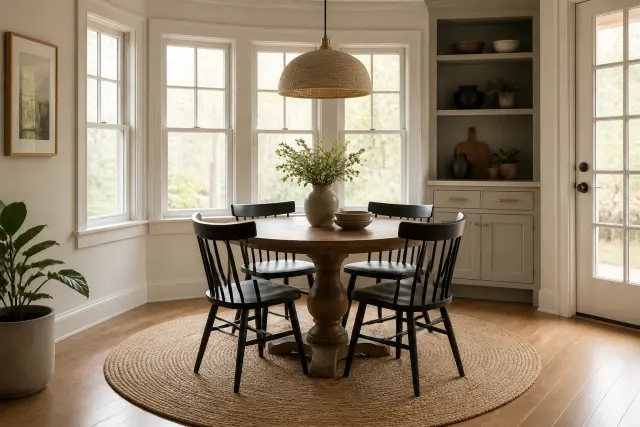
A round rug is especially effective beneath a round dining table, in a breakfast nook, under a small bistro table, or in a reading corner with a curved chair. It can break up a room filled with straight lines, but it still needs to be large enough to serve the furniture. An undersized round rug beneath a dining table creates the same chair-leg problem as an undersized rectangle.
Oval rugs offer a softer profile while still covering a long area, making them useful in some foyers, nurseries, and narrow living rooms. Runners are designed for long, lean routes. Match the rug’s orientation to the furniture grouping or traffic direction whenever possible. A rug placed sideways against the room’s main visual line can make even a correctly sized rug feel off balance.
7. Choose Color, Pattern, and Texture With the Whole Room in Mind
Choose a rug after considering the room’s fixed elements: flooring, wall color, cabinetry, tile, upholstery, window treatments, and major artwork. A rug does not need to match each item. It should repeat or complement enough of the room’s colors to make the scheme feel cohesive. Bring home samples when possible, because colors shift dramatically between showroom lighting, phone screens, and your home’s daylight.
Use contrast deliberately
On dark flooring, a lighter or medium-toned rug can brighten the room and make furniture edges easier to see. On pale flooring, a deeper rug can provide definition. If your sofa, curtains, and walls are mostly neutral, a rug is an easy place to introduce muted color or pattern. If the room already has patterned upholstery, bold art, or dramatic wallpaper, a quieter rug may give the eye a place to rest.
Pattern also affects maintenance. Small-scale patterns, flecks, and tonal variation often disguise everyday lint and minor marks better than a single flat color. Very pale rugs can be lovely in low-traffic spaces, but place them thoughtfully near doors, dining tables, and homes with active pets. Texture matters too: a woven, nubby surface reads casually while a smooth low-pile rug can feel more tailored and formal.
8. Compare Rug Materials and Construction
Fiber determines how a rug feels, wears, cleans, and reacts to moisture. There is no universally best material. The right option depends on the room, your household, your budget, and whether the rug will be exposed to frequent spills or sun.
Natural fibers
Wool is valued for its resilience, warmth, and naturally textured appearance. It can be a strong choice for living rooms and bedrooms, although shedding may occur initially and prompt spill attention is important. Cotton rugs are often soft and casual, but they may show wear sooner in busy areas and can shift without a pad. Jute, sisal, and seagrass add natural texture, though their coarse feel and sensitivity to moisture make them better suited to dry, lower-spill spaces.
Synthetic and performance-minded options
Polypropylene, polyester, nylon, and blended fibers are common choices for active households because many are easy to clean and available at a broad range of price points. Indoor-outdoor rugs can be useful in covered patios, mudrooms, and sunny areas, but check that the product is appropriate for your exact location and flooring. Rubber or latex backing can react with some finishes over time, so use a compatible pad and follow both the rug and flooring manufacturer’s guidance.
9. Pick a Pile Height and Construction for Everyday Comfort
Pile height is the thickness of the rug surface. Low-pile and flatwoven rugs are generally easier to vacuum, allow doors to clear more easily, and work well beneath dining chairs. Medium-pile rugs offer more cushioning while remaining manageable in many living rooms. High-pile and shag styles can feel luxurious in bedrooms or low-traffic lounges, but they require more careful vacuuming and may trap crumbs, pet hair, and dust.
Understand construction tradeoffs
Hand-knotted rugs are typically labor-intensive and can be long-lasting when well made and properly cared for. Hand-tufted rugs offer a softer, substantial look at a range of price points, though longevity varies by materials and construction. Machine-made rugs provide many practical, budget-friendly designs and can be excellent choices for busy spaces. Flatweaves are thin, versatile, and often reversible, but they usually need a quality pad to stay in place.
Inspect the rug in person when you can. Look at the backing, edge binding, pile density, and whether the corners lie flat. Feel the surface with your hand and imagine cleaning it. If you are ordering online, confirm the stated dimensions, fiber content, care directions, return policy, and whether fringe is included in the listed length. These details affect both fit and long-term satisfaction.
10. Use a Rug Pad and Make a Care Plan
A rug pad is not an optional finishing touch in most homes. It helps prevent sliding, reduces wear from friction, adds comfort, and can improve the way a rug lies on the floor. Choose a pad made for your flooring type and rug material. Some pads are designed for hard surfaces, while others are made for carpet-on-carpet use. Avoid assuming that any non-slip backing is safe for every floor finish.
Prioritize safety and floor protection
Rug edges, curled corners, and sliding runners are trip hazards. Use a properly sized pad, flatten curled edges promptly, and replace a rug that no longer lies securely. Keep rugs away from heat sources where the manufacturer advises against use, and ensure floor vents, outlets, and escape routes are not obstructed. In rental homes, condos, or multifamily buildings, review lease terms or building rules before placing rugs on shared exterior walkways, balconies, or anywhere fire-safety requirements may apply.
Vacuum according to the rug’s care guidance, addressing spills quickly by blotting rather than rubbing. Rotate the rug periodically so sunlight, footsteps, and furniture pressure are distributed more evenly. Use furniture cups or pads under heavy legs when appropriate, and move furniture carefully instead of dragging it across fibers. For a valuable, delicate, or heavily soiled rug, consult a qualified rug-cleaning professional rather than experimenting with harsh cleaners.
Before checkout, review the complete plan: confirmed dimensions, furniture placement, door clearance, pad compatibility, fiber choice, and cleaning expectations. Taking a photo of the painter’s-tape outline and keeping room measurements on your phone makes it easier to compare options in a store or online.
Remember that a rug does not need to be permanent to be worthwhile. A durable, easy-care choice can serve a high-traffic stage of life, while a more delicate statement rug may make sense later in a quieter space. Choosing based on present use is usually wiser than choosing solely for an idealized room.
Conclusion
The right area rug is the one that fits your layout, supports how your household lives, and feels intentional in the room. Start with measurements, use tape to test the footprint, and choose placement before falling in love with a color or pattern. Then select a material, pile, and rug pad that match the room’s traffic and maintenance needs.
Whether you are anchoring a large living room, giving a bedroom a softer feel, or making a hallway safer and more finished, proportion is the foundation. With a clear plan and a few practical checks, an area rug can pull the entire room together for years to come.
Frequently Asked Questions
What is the easiest way to tell if an area rug is too small?
Outline the proposed rug size on the floor with painter’s tape. In a living room, a rug is often too small when it only sits beneath the coffee table and does not connect to the main seating. In a dining room, it is too small if chair legs leave the rug when chairs are pulled out.
Should all furniture legs be on an area rug?
Not necessarily. In many living rooms, placing only the front legs of the sofa and chairs on the rug creates a balanced, cohesive look. Larger rooms may accommodate all legs on the rug, while smaller rooms may need a more limited placement.
What type of rug is best for homes with pets?
A low-pile or flatwoven rug in a medium tone, subtle pattern, or heathered color is often practical for pet households. Choose a durable fiber with care instructions that fit your routine, use a secure pad, and address accidents promptly.
Do I need a rug pad on hardwood floors?
In most cases, yes. A compatible rug pad helps prevent slipping, reduces wear, adds cushioning, and helps the rug lie flat. Verify that the pad is approved for your specific floor finish and does not contain materials that could discolor or damage it.
How large should a dining room rug be?
The rug should extend beyond the table far enough that chairs remain fully supported when pulled back for seating. Measure the table at its widest everyday configuration and add clearance around all sides before selecting a standard rug size.
Can I put an indoor-outdoor rug inside my home?
Yes, many indoor-outdoor rugs work well in mudrooms, kitchens, sunrooms, and other active indoor spaces. Check the manufacturer’s recommended use, use a floor-compatible pad if needed, and confirm that the backing is suitable for your flooring.