
Interior Design

Modern Bedroom Design Ideas

Create a modern bedroom that feels calm, comfortable, and personal with practical guidance on layout, color, lighting, storage, materials, and finishing details.
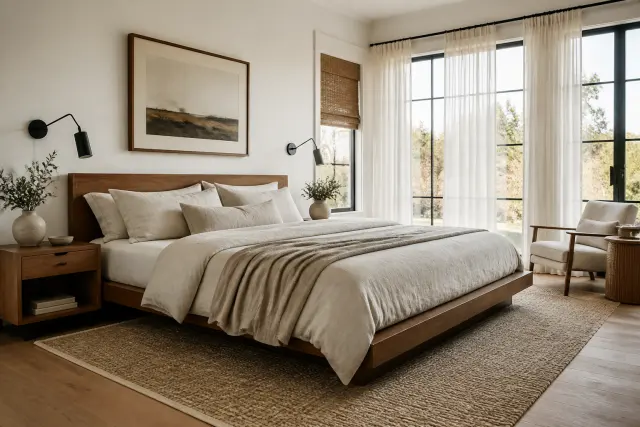
Warm modern primary bedroom with a walnut platform bed, layered neutral bedding, and soft natural light.

Introduction

A successful modern bedroom design is not about making a room look cold, empty, or overly expensive. It is about creating a restful space with a clear visual order: useful furniture, comfortable layers, intentional lighting, and a limited mix of colors and finishes. Modern bedrooms often favor clean lines and uncluttered surfaces, but the best versions still feel warm enough to support real daily life.

Start with how you use the room. A bedroom may be a quiet place to sleep, a spot to read, a dressing area, or, in some homes, a temporary work zone. Those needs should guide every choice before you settle on a color palette or a headboard. When the layout works and the essentials are comfortable, a modern look becomes much easier to build.

The ideas below can work in a compact apartment bedroom, a suburban primary suite, or a guest room. Use them as a framework rather than a strict formula. Keep what improves comfort, edit what adds visual noise, and leave enough open space for the room to feel like a retreat.
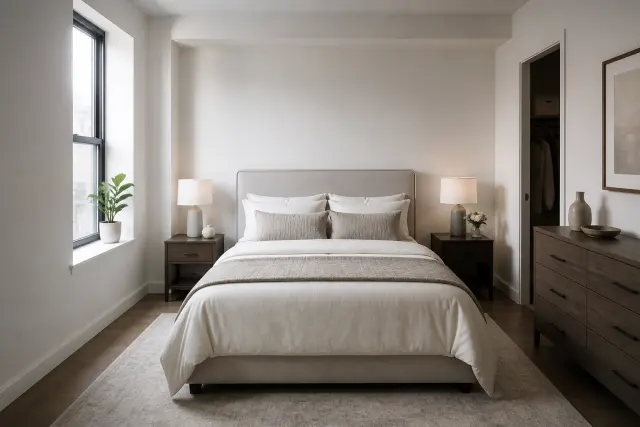
Compact modern bedroom with a centered bed and clear walking space.
An open circulation path makes even a smaller bedroom feel more comfortable and intentional.

1. Begin With a Functional, Uncluttered Layout

Modern rooms benefit from breathing room. Before buying anything, measure the walls, windows, doors, closet swings, radiators, and existing outlets. Mark a simple floor plan on paper or with painter's tape on the floor. This step can prevent common mistakes, such as purchasing a bed that blocks a closet or placing a dresser where a door cannot open fully.

Let the bed establish the focal point

In most bedrooms, the bed should be the natural focal point. If possible, center it on the longest uninterrupted wall, usually with the headboard against that wall. Leave a comfortable path on both sides when the room allows. In a tight room, prioritize an accessible route from the doorway to the bed and closet rather than forcing perfect symmetry.

Consider what you see first from the doorway. A well-made bed with a simple headboard, two balanced nightstands, and a well-placed lamp creates an orderly first impression. Avoid lining every wall with furniture. An open wall or a carefully selected piece of art can make the room feel more deliberate than another bulky storage piece.

Plan clear circulation zones

Try to maintain a clear walkway around the foot or side of the bed. Furniture should not create a daily obstacle course, especially near bathroom doors, closets, and windows. If a bedroom doubles as an office, separate the work surface from the sleep zone when possible. A slim desk facing a wall, a closed storage cabinet, or a folding screen can help keep work materials out of view at bedtime.

2. Build a Calm Color Palette With Contrast

Modern color schemes are often restrained, not colorless. Start with two or three main colors and repeat them throughout the room. Warm white, soft gray, mushroom, taupe, charcoal, muted green, deep blue, and clay are flexible choices because they can support wood, metal, linen, and upholstered furniture without competing with them.

Use contrast to keep a neutral bedroom from feeling flat. For example, pair warm off-white walls with a walnut bed frame, charcoal lamps, and oatmeal bedding. Or use soft blue-gray walls with pale oak furniture and black picture frames. The goal is visual depth, not a collection of unrelated accent colors.

Choose undertones carefully

Paint and textiles change significantly with the light in a room. North-facing bedrooms often receive cooler daylight and may feel more inviting with warm whites, beige, or subdued warm gray. South- and west-facing rooms receive stronger light and can usually handle deeper or cooler tones. Test paint samples on more than one wall and view them morning, afternoon, and evening before committing.

If you rent or prefer a low-commitment update, keep walls neutral and bring color through a duvet cover, lumbar pillow, rug, art, or curtains. These pieces are easier to replace when your preferences change, while the broader palette keeps the room cohesive.
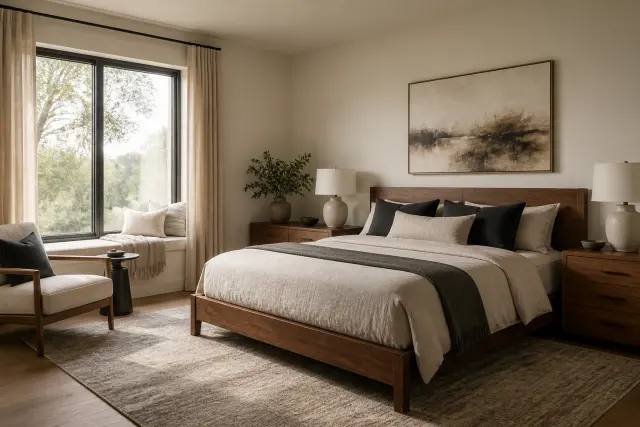
Modern bedroom in warm white, walnut, oatmeal, and charcoal tones.
A restrained palette gains depth from contrasting dark accents and warm natural wood.

3. Choose Furniture With Clean Lines and the Right Scale

Modern bedroom furniture generally has straightforward silhouettes, but it should never be selected for looks alone. Check dimensions, drawer clearance, mattress height, and the actual path through hallways and stairwells before ordering. A visually light bed frame with open space beneath it can help a small room feel larger, while a low, substantial upholstered bed may give a larger primary bedroom a grounded feel.

Match the bed frame to the room's needs

Platform beds, simple wood frames, and upholstered headboards are all good candidates for a modern bedroom. A headboard in linen-like upholstery softens sharp lines, while oak, walnut, or painted wood adds a natural, lasting quality. If you need more storage, choose a bed with built-in drawers only if there is enough clearance to open them. In a narrow room, lift-up storage may be more practical than side drawers.

Nightstands do not have to match exactly, but they should share a similar visual weight and height. Ideally, the top is close to mattress height so a glass of water, lamp, or book is easy to reach. A narrow floating shelf can substitute for a nightstand in a very small bedroom, though it must be installed securely into appropriate wall framing or rated anchors.

Use fewer, better-sized pieces

A dresser, bench, lounge chair, or vanity can be useful, but not every bedroom needs all of them. Select the pieces that solve a real problem. A storage bench at the foot of the bed is helpful only if it does not crowd the walkway. In a larger room, one sculptural chair and a small side table can create a reading corner without turning the room into a furniture showroom.

4. Layer Lighting for Comfort and Flexibility

One bright ceiling fixture rarely creates a relaxing bedroom. A modern lighting plan uses layers: ambient light for general visibility, task light for reading and getting ready, and accent light for atmosphere. Combining these layers lets you make the room bright and practical in the morning and softer in the evening.

Balance overhead, bedside, and accent light

Use a ceiling-mounted fixture, flush mount, or fan light as the ambient source. Add bedside lamps, wall sconces, or pendants for reading. Sconces and pendants free up nightstand space, but installation may require an electrician if wiring is not already in place. Plug-in sconces are a practical alternative, provided cords are routed safely and not pinched behind furniture or run beneath rugs.

Choose bulbs that suit the room's purpose. Warm white light generally creates a more restful feel in a bedroom than a harsh, cool light. Dimmers make a major difference, especially for overhead fixtures. Use compatible dimmable bulbs and a compatible dimmer switch; an electrician can help if lights flicker, buzz, or do not dim smoothly.

Consider bedside safety

Keep lamps stable and away from bedding, curtains, and water. Avoid overloading power strips behind the bed, and replace frayed cords promptly. If you are updating electrical wiring or adding hardwired fixtures, use a qualified professional and follow local permit and electrical-code requirements. These details are not decorative, but they are essential to a comfortable, safe bedroom.
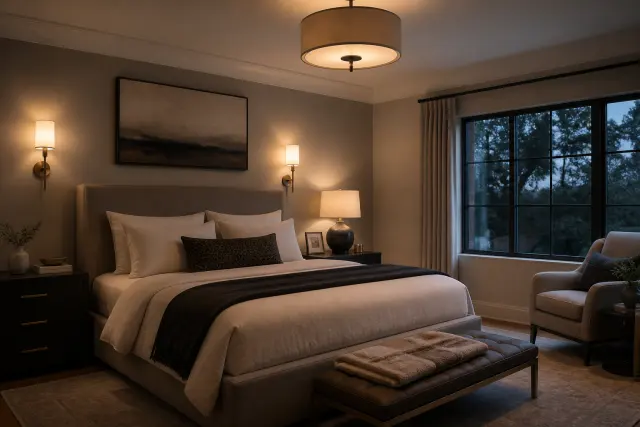
Modern bedroom illuminated by soft bedside sconces and layered evening lighting.
Layered lighting supports reading, getting ready, and a more relaxing nighttime atmosphere.

5. Add Hidden Storage Before Adding More Decor

Clutter is one of the fastest ways to undermine a modern bedroom. The solution is not to hide everything in random bins; it is to give frequently used items a predictable home. Begin by editing what belongs in the bedroom, then choose storage that fits the room's architecture and your routine.

Make the closet work harder

Simple closet upgrades can have a large effect. Add a second hanging rod where appropriate, shelf dividers for folded clothes, clear labeled containers for seasonal items, and matching hangers for a cleaner visual rhythm. Keep frequently worn items within easy reach. Store off-season clothing in breathable containers or under-bed bins only after it is clean and completely dry.

In humid areas, do not pack closet storage so tightly that air cannot circulate. Moisture and poor ventilation can contribute to musty odors or mildew on textiles. Investigate persistent dampness rather than masking it with fragrance products. A local professional may be needed if you see active leaks, repeated condensation, or signs of mold growth.

Choose furniture that earns its footprint

A dresser with deep drawers, a lift-top bench, or a nightstand with a drawer can reduce the need for extra baskets and open shelving. Keep open shelves limited to objects you actually enjoy seeing: a few books, a framed photo, or a small ceramic piece. Closed storage is especially useful in a small modern bedroom because it keeps the strongest visual lines clear.

6. Warm Up Minimalism With Texture and Natural Materials

Minimalism works best in a bedroom when it includes tactile contrast. A room containing only smooth white surfaces and black metal can feel more like a display than a place to unwind. Add texture through breathable bedding, a woven rug, wood furniture, a textured shade, plaster-like wall finish, or a single upholstered element.

Mix finishes with restraint

Choose one dominant wood tone and one or two supporting finishes. For instance, medium oak can pair beautifully with aged brass accents and creamy linen, while walnut works well with matte black and warm gray. The finishes do not need to match perfectly, but they should feel related in temperature and visual weight.

Natural materials also need realistic care. Solid wood can expand or contract with changes in indoor humidity, while veneer and laminate can be more stable and budget-friendly. Use coasters on wood nightstands, wipe spills quickly, and avoid placing delicate finishes directly over heat vents or in intense, unfiltered sun.

Layer the bed instead of overcrowding it

A tailored bed is often the room's most important texture. Start with comfortable sheets, add a duvet or quilt, and fold a lightweight blanket across the foot. Two sleeping pillows plus one or two decorative pillows are often enough. This creates a polished look without making the bed burdensome to remake every day.
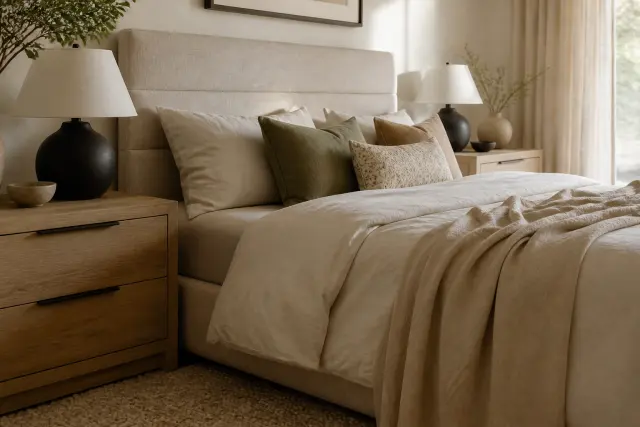
Textured modern bedroom with linen upholstery, oak furniture, and a woven rug.
Natural texture keeps clean-lined modern furniture from feeling stark.

7. Treat Windows as Both a Design Feature and a Comfort Tool

Window treatments shape the mood of a modern bedroom more than many people expect. They soften hard architectural lines, provide privacy, and help manage daylight. A simple combination of functional shades and full-length curtain panels offers flexibility without visual fuss.

Layer privacy and light control

For bedrooms that face a neighboring home or a street, use a privacy layer such as a shade, blind, or sheer panel. Add room-darkening drapes or a blackout shade if early sunrise, outdoor lighting, or shift-work hours make sleep difficult. Mount curtain rods wider than the window frame when possible so open panels expose more glass and make the window appear larger.

In hot climates, window coverings can reduce the intensity of direct sun and help protect fabrics from fading. In cold climates, well-fitted cellular shades or lined curtains may reduce drafts near older windows. They are not a substitute for repairing failed windows, weatherstripping, or insulation problems, but they can improve day-to-day comfort.

Keep safety in mind

Select cordless window coverings or use approved cord-safety devices in homes with young children or pets. Keep beds and climbable furniture away from windows where possible, and do not rely on insect screens to prevent falls. Window modifications, especially in bedrooms used for sleeping, should not interfere with required emergency escape and rescue openings. Check local requirements before making permanent changes.

8. Make the Room Personal Without Filling Every Surface

Modern does not mean anonymous. Personal details are what make a bedroom feel like yours, but they work best when they are edited. Choose a few meaningful elements rather than scattering small accessories across every horizontal surface.

Create one intentional art moment

A single large framed print above the bed, a pair of related pieces, or a small gallery on an adjacent wall can establish personality. Consider scale before hanging anything. Art that is too small over a wide headboard can look lost, while a piece that is too large can overwhelm the room. Use proper picture-hanging hardware for the wall type and the item's weight.

For a calm look, repeat a color from the bedding or rug in the art. Black, oak, or brass frames can echo other finishes in the room. If you prefer photography, landscapes, abstract forms, and architectural images often fit a modern scheme while still offering individual character.

Style surfaces with purpose

Keep the nightstand practical: a lamp, a small tray, a book, and perhaps a small plant or framed photo are enough. A dresser can hold a mirror and a low arrangement of objects, but leave some blank space. If you display plants, choose a pot with a saucer and confirm the plant's light needs before placing it near a window.
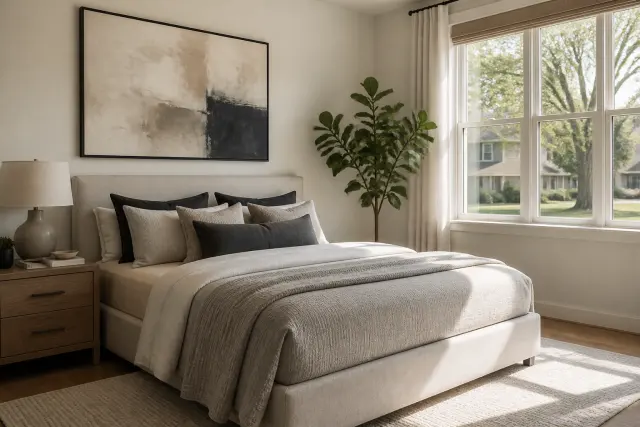
Modern bedroom with large wall art, a tidy nightstand, and a houseplant.
A few meaningful, well-scaled details add personality without overwhelming the room.

9. Design a Modern Bedroom on a Realistic Budget

A complete renovation is not required for a modern update. The biggest visual changes often come from paint, bedding, lighting, curtains, and removing excess furniture. Set a budget by ranking priorities: sleep comfort, storage, light control, and then decorative upgrades. This keeps you from spending heavily on accessories while ignoring a sagging mattress or inadequate window covering.

Spend where your body notices the difference

Prioritize a supportive mattress, comfortable pillows, breathable sheets, and a sturdy bed frame. These items affect daily comfort more than a trend-driven accent chair or an elaborate wall treatment. If a new mattress is in your plan, verify return policies, delivery access, and whether your existing foundation is compatible with the manufacturer's guidance.

Save on accents that are easy to swap later. Affordable curtain panels, pillow covers, framed printable art, secondhand wood furniture, and simple table lamps can all contribute to a refined room. When buying used furniture, inspect it for structural damage, odors, pests, and unstable drawers before bringing it indoors.

Update in deliberate stages

Start with a clean layout and paint, then add the bed textiles and window treatments. Next, improve lighting and storage. Finish with art and small decorative pieces. A staged approach gives you time to see how each choice works in your room's actual daylight and prevents impulse purchases that do not fit the overall plan.

10. Maintain the Look and Know When to Call a Professional

A modern bedroom stays appealing because it is easy to maintain. Build a short weekly reset into your routine: clear surfaces, put laundry away, dust lamps and nightstands, and vacuum or shake out the rug. Wash bedding according to its care label, rotate the mattress if its manufacturer recommends it, and periodically tighten loose bed-frame hardware.

Protect indoor air quality and finishes

Ventilate the room when weather allows, especially after painting, installing new flooring, or bringing in new furniture with noticeable odors. Follow product directions for paint, adhesives, cleaning products, and wood finishes. Avoid mixing household cleaners, and use a mild cleaner appropriate to the material rather than abrasive products that can dull metal, damage wood coatings, or weaken fabric.

Call a qualified electrician for new circuits, hardwired lighting, or outlets that feel warm, spark, or repeatedly trip breakers. Contact a licensed contractor or other appropriate local professional for water damage, significant wall cracks, pest concerns, persistent mold-like growth, or structural issues. If your project changes walls, windows, electrical systems, or egress conditions, ask your local building department about permits and code requirements before work begins.

Orderly modern bedroom with neatly made bedding and organized storage.
Simple maintenance routines preserve the calm, uncluttered feeling of a modern bedroom.

When the main design pieces are in place, live with the room for a few weeks before adding more. Notice where you set down a glass, whether the bedside lighting is useful, and which surfaces collect clutter. Small adjustments based on everyday habits are more valuable than copying a perfectly styled photo.

Finally, allow some empty space. A modern bedroom does not need every wall, shelf, and corner to be filled. Clear surfaces and a manageable amount of furniture make routine cleaning easier, improve circulation, and let the materials and personal items you chose stand out.
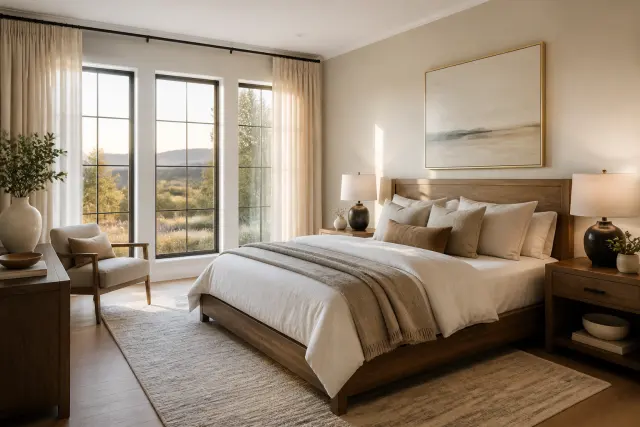
Finished serene modern bedroom with warm wood, soft bedding, and morning light.
The best modern bedroom is one that feels simple, personal, and easy to live in.

Conclusion

The most inviting modern bedroom design balances simplicity with comfort. Begin with a layout that supports movement, use a limited palette with texture and contrast, layer the lighting, and choose storage that keeps daily clutter under control. From there, add only the furniture and personal details that improve how the room feels and functions.

You do not have to complete the room at once. Start with the bed, lighting, and window treatments, then refine the space as you learn what you need. With thoughtful scale, useful storage, and a few warm materials, a modern bedroom can become a calm, durable retreat that suits your home and your routine.

Frequently Asked Questions

What colors work best for a modern bedroom design?

Warm white, taupe, soft gray, muted green, blue-gray, charcoal, and deep navy all work well. Choose two or three main colors, then add contrast with wood, black, brass, or textiles. Always test paint samples in the room because daylight and artificial light change how undertones appear.

How can I make a small bedroom look modern without making it feel cramped?

Use a simple bed frame, keep walkways clear, select appropriately scaled nightstands, and rely on closed storage. Light walls, fewer large furniture pieces, layered lighting, and curtains mounted high and wide can make the room feel more open. Avoid filling every wall with shelves or decor.

Do modern bedrooms need matching furniture?

No. Furniture does not need to match as a set. It should share a visual relationship through scale, color temperature, material, or line. For example, a walnut bed can work with painted nightstands if both have simple shapes and similar visual weight.

What type of lighting is best for a modern bedroom?

Use layered lighting: an overhead fixture for general light, bedside lamps or sconces for reading, and optional accent lighting for mood. Warm white bulbs and dimmers usually create a more relaxing environment. Hire a qualified electrician for hardwired changes or electrical concerns.

How do I make a modern bedroom feel warmer?

Add texture and natural materials. Linen-like bedding, a wool or woven rug, wood furniture, upholstered elements, soft curtains, and warm-toned lighting can make clean-lined furniture feel inviting. Limit the number of finishes so the room remains calm rather than busy.

Are blackout curtains necessary in a bedroom?

They are not necessary for every bedroom, but they can be helpful if outdoor lights, early sunrise, or shift-work schedules interfere with sleep. Layering blackout curtains or shades with a privacy treatment gives you more control over light and privacy.

What should I prioritize when updating a bedroom on a budget?

Prioritize sleep comfort, practical lighting, window treatments, and storage before decorative accessories. Paint, bedding, curtain panels, and decluttering often make a substantial visual difference without requiring a full renovation.

Interior Design

Modern Bedroom Design Ideas

Create a modern bedroom that feels calm, comfortable, and personal with practical guidance on layout, color, lighting, storage, materials, and finishing details.

Warm modern primary bedroom with a walnut platform bed, layered neutral bedding, and soft natural light.

Introduction

A successful modern bedroom design is not about making a room look cold, empty, or overly expensive. It is about creating a restful space with a clear visual order: useful furniture, comfortable layers, intentional lighting, and a limited mix of colors and finishes. Modern bedrooms often favor clean lines and uncluttered surfaces, but the best versions still feel warm enough to support real daily life.

Start with how you use the room. A bedroom may be a quiet place to sleep, a spot to read, a dressing area, or, in some homes, a temporary work zone. Those needs should guide every choice before you settle on a color palette or a headboard. When the layout works and the essentials are comfortable, a modern look becomes much easier to build.

The ideas below can work in a compact apartment bedroom, a suburban primary suite, or a guest room. Use them as a framework rather than a strict formula. Keep what improves comfort, edit what adds visual noise, and leave enough open space for the room to feel like a retreat.

Compact modern bedroom with a centered bed and clear walking space.
An open circulation path makes even a smaller bedroom feel more comfortable and intentional.

1. Begin With a Functional, Uncluttered Layout

Modern rooms benefit from breathing room. Before buying anything, measure the walls, windows, doors, closet swings, radiators, and existing outlets. Mark a simple floor plan on paper or with painter's tape on the floor. This step can prevent common mistakes, such as purchasing a bed that blocks a closet or placing a dresser where a door cannot open fully.

Let the bed establish the focal point

In most bedrooms, the bed should be the natural focal point. If possible, center it on the longest uninterrupted wall, usually with the headboard against that wall. Leave a comfortable path on both sides when the room allows. In a tight room, prioritize an accessible route from the doorway to the bed and closet rather than forcing perfect symmetry.

Consider what you see first from the doorway. A well-made bed with a simple headboard, two balanced nightstands, and a well-placed lamp creates an orderly first impression. Avoid lining every wall with furniture. An open wall or a carefully selected piece of art can make the room feel more deliberate than another bulky storage piece.

Plan clear circulation zones

Try to maintain a clear walkway around the foot or side of the bed. Furniture should not create a daily obstacle course, especially near bathroom doors, closets, and windows. If a bedroom doubles as an office, separate the work surface from the sleep zone when possible. A slim desk facing a wall, a closed storage cabinet, or a folding screen can help keep work materials out of view at bedtime.

2. Build a Calm Color Palette With Contrast

Modern color schemes are often restrained, not colorless. Start with two or three main colors and repeat them throughout the room. Warm white, soft gray, mushroom, taupe, charcoal, muted green, deep blue, and clay are flexible choices because they can support wood, metal, linen, and upholstered furniture without competing with them.

Use contrast to keep a neutral bedroom from feeling flat. For example, pair warm off-white walls with a walnut bed frame, charcoal lamps, and oatmeal bedding. Or use soft blue-gray walls with pale oak furniture and black picture frames. The goal is visual depth, not a collection of unrelated accent colors.

Choose undertones carefully

Paint and textiles change significantly with the light in a room. North-facing bedrooms often receive cooler daylight and may feel more inviting with warm whites, beige, or subdued warm gray. South- and west-facing rooms receive stronger light and can usually handle deeper or cooler tones. Test paint samples on more than one wall and view them morning, afternoon, and evening before committing.

If you rent or prefer a low-commitment update, keep walls neutral and bring color through a duvet cover, lumbar pillow, rug, art, or curtains. These pieces are easier to replace when your preferences change, while the broader palette keeps the room cohesive.

Modern bedroom in warm white, walnut, oatmeal, and charcoal tones.
A restrained palette gains depth from contrasting dark accents and warm natural wood.

3. Choose Furniture With Clean Lines and the Right Scale

Modern bedroom furniture generally has straightforward silhouettes, but it should never be selected for looks alone. Check dimensions, drawer clearance, mattress height, and the actual path through hallways and stairwells before ordering. A visually light bed frame with open space beneath it can help a small room feel larger, while a low, substantial upholstered bed may give a larger primary bedroom a grounded feel.

Match the bed frame to the room's needs

Platform beds, simple wood frames, and upholstered headboards are all good candidates for a modern bedroom. A headboard in linen-like upholstery softens sharp lines, while oak, walnut, or painted wood adds a natural, lasting quality. If you need more storage, choose a bed with built-in drawers only if there is enough clearance to open them. In a narrow room, lift-up storage may be more practical than side drawers.

Nightstands do not have to match exactly, but they should share a similar visual weight and height. Ideally, the top is close to mattress height so a glass of water, lamp, or book is easy to reach. A narrow floating shelf can substitute for a nightstand in a very small bedroom, though it must be installed securely into appropriate wall framing or rated anchors.

Use fewer, better-sized pieces

A dresser, bench, lounge chair, or vanity can be useful, but not every bedroom needs all of them. Select the pieces that solve a real problem. A storage bench at the foot of the bed is helpful only if it does not crowd the walkway. In a larger room, one sculptural chair and a small side table can create a reading corner without turning the room into a furniture showroom.

4. Layer Lighting for Comfort and Flexibility

One bright ceiling fixture rarely creates a relaxing bedroom. A modern lighting plan uses layers: ambient light for general visibility, task light for reading and getting ready, and accent light for atmosphere. Combining these layers lets you make the room bright and practical in the morning and softer in the evening.

Balance overhead, bedside, and accent light

Use a ceiling-mounted fixture, flush mount, or fan light as the ambient source. Add bedside lamps, wall sconces, or pendants for reading. Sconces and pendants free up nightstand space, but installation may require an electrician if wiring is not already in place. Plug-in sconces are a practical alternative, provided cords are routed safely and not pinched behind furniture or run beneath rugs.

Choose bulbs that suit the room's purpose. Warm white light generally creates a more restful feel in a bedroom than a harsh, cool light. Dimmers make a major difference, especially for overhead fixtures. Use compatible dimmable bulbs and a compatible dimmer switch; an electrician can help if lights flicker, buzz, or do not dim smoothly.

Consider bedside safety

Keep lamps stable and away from bedding, curtains, and water. Avoid overloading power strips behind the bed, and replace frayed cords promptly. If you are updating electrical wiring or adding hardwired fixtures, use a qualified professional and follow local permit and electrical-code requirements. These details are not decorative, but they are essential to a comfortable, safe bedroom.

Modern bedroom illuminated by soft bedside sconces and layered evening lighting.
Layered lighting supports reading, getting ready, and a more relaxing nighttime atmosphere.

5. Add Hidden Storage Before Adding More Decor

Clutter is one of the fastest ways to undermine a modern bedroom. The solution is not to hide everything in random bins; it is to give frequently used items a predictable home. Begin by editing what belongs in the bedroom, then choose storage that fits the room's architecture and your routine.

Make the closet work harder

Simple closet upgrades can have a large effect. Add a second hanging rod where appropriate, shelf dividers for folded clothes, clear labeled containers for seasonal items, and matching hangers for a cleaner visual rhythm. Keep frequently worn items within easy reach. Store off-season clothing in breathable containers or under-bed bins only after it is clean and completely dry.

In humid areas, do not pack closet storage so tightly that air cannot circulate. Moisture and poor ventilation can contribute to musty odors or mildew on textiles. Investigate persistent dampness rather than masking it with fragrance products. A local professional may be needed if you see active leaks, repeated condensation, or signs of mold growth.

Choose furniture that earns its footprint

A dresser with deep drawers, a lift-top bench, or a nightstand with a drawer can reduce the need for extra baskets and open shelving. Keep open shelves limited to objects you actually enjoy seeing: a few books, a framed photo, or a small ceramic piece. Closed storage is especially useful in a small modern bedroom because it keeps the strongest visual lines clear.

6. Warm Up Minimalism With Texture and Natural Materials

Minimalism works best in a bedroom when it includes tactile contrast. A room containing only smooth white surfaces and black metal can feel more like a display than a place to unwind. Add texture through breathable bedding, a woven rug, wood furniture, a textured shade, plaster-like wall finish, or a single upholstered element.

Mix finishes with restraint

Choose one dominant wood tone and one or two supporting finishes. For instance, medium oak can pair beautifully with aged brass accents and creamy linen, while walnut works well with matte black and warm gray. The finishes do not need to match perfectly, but they should feel related in temperature and visual weight.

Natural materials also need realistic care. Solid wood can expand or contract with changes in indoor humidity, while veneer and laminate can be more stable and budget-friendly. Use coasters on wood nightstands, wipe spills quickly, and avoid placing delicate finishes directly over heat vents or in intense, unfiltered sun.

Layer the bed instead of overcrowding it

A tailored bed is often the room's most important texture. Start with comfortable sheets, add a duvet or quilt, and fold a lightweight blanket across the foot. Two sleeping pillows plus one or two decorative pillows are often enough. This creates a polished look without making the bed burdensome to remake every day.

Textured modern bedroom with linen upholstery, oak furniture, and a woven rug.
Natural texture keeps clean-lined modern furniture from feeling stark.

7. Treat Windows as Both a Design Feature and a Comfort Tool

Window treatments shape the mood of a modern bedroom more than many people expect. They soften hard architectural lines, provide privacy, and help manage daylight. A simple combination of functional shades and full-length curtain panels offers flexibility without visual fuss.

Layer privacy and light control

For bedrooms that face a neighboring home or a street, use a privacy layer such as a shade, blind, or sheer panel. Add room-darkening drapes or a blackout shade if early sunrise, outdoor lighting, or shift-work hours make sleep difficult. Mount curtain rods wider than the window frame when possible so open panels expose more glass and make the window appear larger.

In hot climates, window coverings can reduce the intensity of direct sun and help protect fabrics from fading. In cold climates, well-fitted cellular shades or lined curtains may reduce drafts near older windows. They are not a substitute for repairing failed windows, weatherstripping, or insulation problems, but they can improve day-to-day comfort.

Keep safety in mind

Select cordless window coverings or use approved cord-safety devices in homes with young children or pets. Keep beds and climbable furniture away from windows where possible, and do not rely on insect screens to prevent falls. Window modifications, especially in bedrooms used for sleeping, should not interfere with required emergency escape and rescue openings. Check local requirements before making permanent changes.

8. Make the Room Personal Without Filling Every Surface

Modern does not mean anonymous. Personal details are what make a bedroom feel like yours, but they work best when they are edited. Choose a few meaningful elements rather than scattering small accessories across every horizontal surface.

Create one intentional art moment

A single large framed print above the bed, a pair of related pieces, or a small gallery on an adjacent wall can establish personality. Consider scale before hanging anything. Art that is too small over a wide headboard can look lost, while a piece that is too large can overwhelm the room. Use proper picture-hanging hardware for the wall type and the item's weight.

For a calm look, repeat a color from the bedding or rug in the art. Black, oak, or brass frames can echo other finishes in the room. If you prefer photography, landscapes, abstract forms, and architectural images often fit a modern scheme while still offering individual character.

Style surfaces with purpose

Keep the nightstand practical: a lamp, a small tray, a book, and perhaps a small plant or framed photo are enough. A dresser can hold a mirror and a low arrangement of objects, but leave some blank space. If you display plants, choose a pot with a saucer and confirm the plant's light needs before placing it near a window.

Modern bedroom with large wall art, a tidy nightstand, and a houseplant.
A few meaningful, well-scaled details add personality without overwhelming the room.

9. Design a Modern Bedroom on a Realistic Budget

A complete renovation is not required for a modern update. The biggest visual changes often come from paint, bedding, lighting, curtains, and removing excess furniture. Set a budget by ranking priorities: sleep comfort, storage, light control, and then decorative upgrades. This keeps you from spending heavily on accessories while ignoring a sagging mattress or inadequate window covering.

Spend where your body notices the difference

Prioritize a supportive mattress, comfortable pillows, breathable sheets, and a sturdy bed frame. These items affect daily comfort more than a trend-driven accent chair or an elaborate wall treatment. If a new mattress is in your plan, verify return policies, delivery access, and whether your existing foundation is compatible with the manufacturer's guidance.

Save on accents that are easy to swap later. Affordable curtain panels, pillow covers, framed printable art, secondhand wood furniture, and simple table lamps can all contribute to a refined room. When buying used furniture, inspect it for structural damage, odors, pests, and unstable drawers before bringing it indoors.

Update in deliberate stages

Start with a clean layout and paint, then add the bed textiles and window treatments. Next, improve lighting and storage. Finish with art and small decorative pieces. A staged approach gives you time to see how each choice works in your room's actual daylight and prevents impulse purchases that do not fit the overall plan.

10. Maintain the Look and Know When to Call a Professional

A modern bedroom stays appealing because it is easy to maintain. Build a short weekly reset into your routine: clear surfaces, put laundry away, dust lamps and nightstands, and vacuum or shake out the rug. Wash bedding according to its care label, rotate the mattress if its manufacturer recommends it, and periodically tighten loose bed-frame hardware.

Protect indoor air quality and finishes

Ventilate the room when weather allows, especially after painting, installing new flooring, or bringing in new furniture with noticeable odors. Follow product directions for paint, adhesives, cleaning products, and wood finishes. Avoid mixing household cleaners, and use a mild cleaner appropriate to the material rather than abrasive products that can dull metal, damage wood coatings, or weaken fabric.

Call a qualified electrician for new circuits, hardwired lighting, or outlets that feel warm, spark, or repeatedly trip breakers. Contact a licensed contractor or other appropriate local professional for water damage, significant wall cracks, pest concerns, persistent mold-like growth, or structural issues. If your project changes walls, windows, electrical systems, or egress conditions, ask your local building department about permits and code requirements before work begins.

Orderly modern bedroom with neatly made bedding and organized storage.
Simple maintenance routines preserve the calm, uncluttered feeling of a modern bedroom.

When the main design pieces are in place, live with the room for a few weeks before adding more. Notice where you set down a glass, whether the bedside lighting is useful, and which surfaces collect clutter. Small adjustments based on everyday habits are more valuable than copying a perfectly styled photo.

Finally, allow some empty space. A modern bedroom does not need every wall, shelf, and corner to be filled. Clear surfaces and a manageable amount of furniture make routine cleaning easier, improve circulation, and let the materials and personal items you chose stand out.

Frequently Asked Questions

What colors work best for a modern bedroom design?

Warm white, taupe, soft gray, muted green, blue-gray, charcoal, and deep navy all work well. Choose two or three main colors, then add contrast with wood, black, brass, or textiles. Always test paint samples in the room because daylight and artificial light change how undertones appear.

How can I make a small bedroom look modern without making it feel cramped?

Use a simple bed frame, keep walkways clear, select appropriately scaled nightstands, and rely on closed storage. Light walls, fewer large furniture pieces, layered lighting, and curtains mounted high and wide can make the room feel more open. Avoid filling every wall with shelves or decor.

Do modern bedrooms need matching furniture?

No. Furniture does not need to match as a set. It should share a visual relationship through scale, color temperature, material, or line. For example, a walnut bed can work with painted nightstands if both have simple shapes and similar visual weight.

What type of lighting is best for a modern bedroom?

Use layered lighting: an overhead fixture for general light, bedside lamps or sconces for reading, and optional accent lighting for mood. Warm white bulbs and dimmers usually create a more relaxing environment. Hire a qualified electrician for hardwired changes or electrical concerns.

How do I make a modern bedroom feel warmer?

Add texture and natural materials. Linen-like bedding, a wool or woven rug, wood furniture, upholstered elements, soft curtains, and warm-toned lighting can make clean-lined furniture feel inviting. Limit the number of finishes so the room remains calm rather than busy.

Are blackout curtains necessary in a bedroom?

They are not necessary for every bedroom, but they can be helpful if outdoor lights, early sunrise, or shift-work schedules interfere with sleep. Layering blackout curtains or shades with a privacy treatment gives you more control over light and privacy.

What should I prioritize when updating a bedroom on a budget?

Prioritize sleep comfort, practical lighting, window treatments, and storage before decorative accessories. Paint, bedding, curtain panels, and decluttering often make a substantial visual difference without requiring a full renovation.

Finished serene modern bedroom with warm wood, soft bedding, and morning light.
The best modern bedroom is one that feels simple, personal, and easy to live in.

Conclusion

The most inviting modern bedroom design balances simplicity with comfort. Begin with a layout that supports movement, use a limited palette with texture and contrast, layer the lighting, and choose storage that keeps daily clutter under control. From there, add only the furniture and personal details that improve how the room feels and functions.

You do not have to complete the room at once. Start with the bed, lighting, and window treatments, then refine the space as you learn what you need. With thoughtful scale, useful storage, and a few warm materials, a modern bedroom can become a calm, durable retreat that suits your home and your routine.